Eng
We are in Janeiro Branco (White January), the time of year when we focus our efforts on talking about mental health care, a topic of great importance to the population. But it is not possible to talk about mental health without also mentioning social justice, an essential factor for understanding what affects the lives of the most vulnerable populations.
People’s well-being depends on many factors beyond the psychological and emotional aspects; it is also affected by the living conditions that shape someone’s daily life, such as social, environmental and economic factors. A UN (United Nations) report indicates that poverty increases the risk of anxiety and depression by up to three times, and this is just one example of the relationship between social justice and mental health.
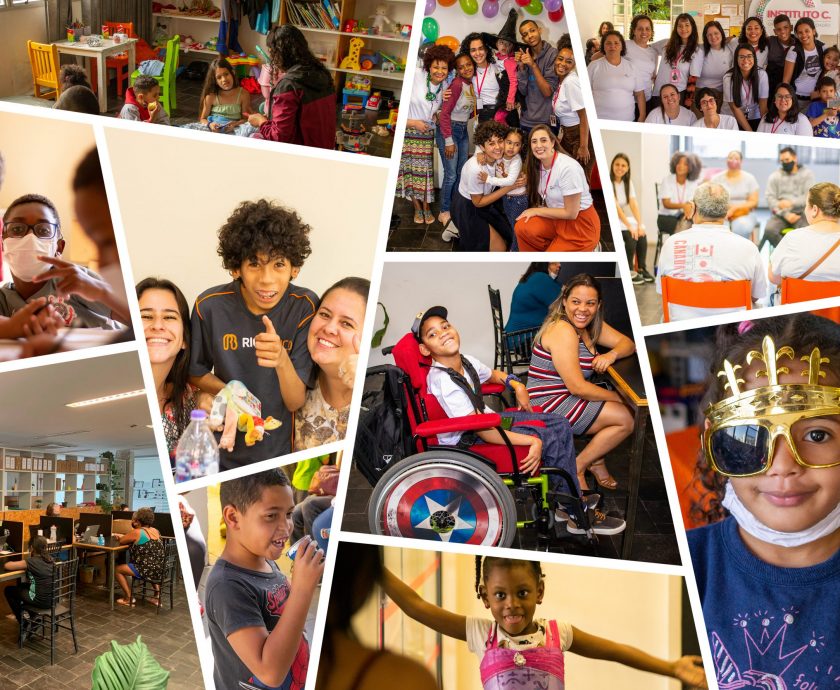
In this way, issues such as social, gender and geographic inequality create barriers that prevent mental health from receiving the care it deserves. At Instituto C, we offer psychosocial support to many families, most of them led by mothers, who are among the groups most affected by mental health issues. Nine out of ten Brazilian mothers suffer from “parental burnout” due to the accumulation of tasks and the lack of a support network, according to a survey by Kiddle Pass in partnership with B2Mamy.
In our daily work, we see how much social factors affect people’s mental health, and we need to pay more attention to this. “Social inequalities not only increase the risk of mental illness, but also limit access to care,” highlights Isabella Zambelli, a psychologist at IC.
How are inequalities linked to mental health?
Inequalities based on race, gender, social class and sexual orientation are some of those that directly affect the population and access to mental health care. Prejudices such as racism, for example, which exposes the Black population to mental disorders, directly impact mental health through the social exclusion and violence suffered by this part of the population.
Women, especially mothers, face an overload of tasks and a double routine, at times a lonely one, of caring for their children, work and home. Suellen Claudino, also a psychologist at Instituto C, works with many women in this situation and sees up close how neglected they are: “a single mother has to take care of the house, take care of the children, work to sort out the family’s finances […] Often she can’t take care of her mental health, and then it ends up being overlooked because of the overload,” she points out.
Territorial and social class inequalities also make it harder to access information about psychological care services, and even to reach health facilities.
Social determinants are still underestimated
Although we understand that inequalities worsen mental health issues, we are still on the way to having public policies that recognize these social factors. That is why policies to reduce inequality, such as cash transfers and policies for access to education and housing, have a positive impact on the population’s mental health.
Instituto Cactus, an organization that works to promote mental health, has already produced support materials that make psychological care possible while taking social determinants into account. Mariana Rae, a mental health specialist at the institute, believes it is impossible to talk about mental health without addressing social justice. “Social justice is not a topic parallel to mental health; it is a constitutive part of care. Ignoring this reduces the possibilities for prevention and health promotion, and ends up shifting onto the individual the responsibility for suffering that is, to a large extent, socially produced,” she explains.
IC psychologist Isabella also explains that, in many contexts, psychological distress is still analyzed only through a biological and individual lens, resulting in excessive medicalization and excluding the social conditions that produce the distress.
In her view, mental health services are still not prepared to deal with cultural and territorial diversity, as they tend to follow standardized models of care. Ultimately, this results in a gap between professionals and the population, further neglecting and stigmatizing mental health.
Mental health services in the SUS
The constitutional right to health also includes mental health care. And this is a duty of the Brazilian State, which must provide dignified conditions of care for the entire population. In Brazil, care for mental health issues is coordinated by the Psychosocial Care Network (RAPS), which is part of the SUS, Brazil’s Unified Health System, and brings together the services that support people experiencing mental distress or facing problems with harmful use of alcohol and other drugs.
These are the public policies that strengthen mental health care for Brazilians and must be preserved. “The implementation of mental health policies is shaped by different understandings of what care is, what psychological distress is and what the State’s role is in this. And these disputes end up influencing priorities, models of care and the quality of care offered in the territories,” notes Mariana Rae.
Today, RAPS brings together different services, such as Primary Health Care/Basic Health Units (UBS), Community and Culture Centers (CECO), Street Clinics (Consultório na Rua), Psychosocial Care Centers (CAPS), Mental Health Beds in General Hospitals, the Back Home Program (Programa Volta para Casa), SAMU 192 (mobile emergency care), Therapeutic Residential Services (SRT), Shelter Units (UA) and 24-hour Emergency Care Units (UPA 24h).
These are existing policies that deserve investment in training and improvement for professionals, so that exclusionary and discriminatory patterns are not reproduced. And so that the understanding of the individual changes to the point where we can look through a lens that integrates all aspects of life, not just repeat an elitist clinical approach,” Isabella emphasizes.
Even with the difficulties faced by the public system, Brazil still stands out with services such as CAPS, which faces high demand but manages to serve the population. CAPS is a very comprehensive system, with multidisciplinary teams including doctors, psychologists, occupational therapists, social workers, nurses and others, who offer continuous care, clinical follow-up and psychosocial support to users and their families. It is recognized by other countries as an innovative and humanized community-based model of mental health care, and a good example of how indispensable public policies are.
How we can help promote mental health
To strengthen mental health care, organizations such as Instituto C, which supports socially vulnerable families, including in the psychosocial area, and Instituto Cactus, which seeks to expand and strengthen the mental health ecosystem in Brazil, are fundamental in supporting the population, but society also has an important role in this mission. The first step is to destigmatize mental health and promote discussions on the topic.
“It is essential that there are community spaces that allow people to broaden their exchanges, both with what they already know and with what is different. This contact helps us understand that realities are not the same and that it is not possible to apply a single perspective to complex issues such as mental health,” says Mariana.
For Isabella, the community should be a welcoming space, working as a support network to reduce isolation and fight stigma through collective and cultural practices. “Territory, beyond being a physical space, is social and symbolic, and can concentrate inequalities, but also community strength and cultural protection.”
Sharing information is also an important task we should do often. Suellen explains that this is one of the most effective ways to talk about mental health and encourage people to take care of it. “That way, we keep spreading information, while also making people aware of their rights,” she adds.
How to get help
Free of charge through the SUS:
Basic Health Unit (UBS): go to the nearest UBS, where a general practitioner can assess your situation and refer you to a psychologist or psychiatrist in the network, as needed.
Psychosocial Care Centers (CAPS): specialized services for mental disorders. There are several types of CAPS, and access can be direct or by referral.
University clinics: universities with Psychology programs that offer free or low-cost care, provided by students supervised by professors.
For emergencies or moments of crisis:
Centro de Valorização da Vida (CVV): call 188 or use the chat on the website (cvv.org.br).
SAMU (192): for psychiatric urgencies/emergencies or suicide threats.
Fire Department (193): for rescue in cases of suicide attempts, serious accidents or psychological support in rescue situations.
Police (190): if there is aggression, violence or threats.
The Mapa da Saúde Mental (Mental Health Map) also lets you search for and find places offering psychological support near your location.