The right to a home also means hope for socially vulnerable families
The right to housing is one of the social rights guaranteed by the 1988 Federal Constitution and is essential for anyone to live with dignity. According to the Housing Deficit Survey, updated by Fundação João Pinheiro with data from the PNADc (Continuous National Household Sample Survey), around 26 million urban households in Brazil have some type of inadequacy.
The same survey also shows that the state of São Paulo has one of the largest housing deficits in the country. This means precarious housing, family cohabitation (when more than one family shares the same home for lack of an alternative), excessive rent burden (when a family spends more than 30% of its income on housing) and overcrowding.
Having a home is not just having a place to shelter, but a safe, adequate and dignified structure in which to live, build bonds, create stories and fully exercise citizenship. In this way, it also becomes possible to exercise other rights.
In practice, we are still somewhat far from ensuring that this right is truly upheld for all Brazilians, but fortunately we can count on some public policies that strengthen access to housing.
At Instituto C, the social work area helps families secure their right to housing through social programs. Franciele Fernandes, a social worker at IC, works with families every day and helps each one looking for a dignified place to live to enroll in the programs, depending on their circumstances. For her, “housing is very important. Because a person who doesn’t have a roof over their head doesn’t know whether they’ll have somewhere to stay tomorrow,” and this guidance work is essential.
I believe housing is a fundamental factor in a person’s life. And when you manage to secure it, it represents human dignity.”
Public housing policies
Among public housing policies, some are better known to Brazilians, such as the ones below:
Minha Casa Minha Vida (My House, My Life)
Minha Casa Minha Vida is the Federal Government’s main housing program, created in 2009 to expand access to decent housing for low- and middle-income families. The program works according to income brackets: the lower the family income, the greater the government support.
Families can receive subsidies — part of the property’s value is paid by the government — or gain access to financing with reduced interest rates and longer repayment periods. Enrollment is usually done through financial agents, such as Caixa Econômica Federal, or through municipal housing registries.
Pode Entrar (São Paulo)
The Pode Entrar (“Come In”) Program is the largest affordable housing initiative in the city of São Paulo, focused on acquiring and building decent homes for low-income families. The program serves families with incomes of up to 6 minimum wages, prioritizing the purchase of private properties, public-private partnerships (PPPs) and land regularization.
To take part, families must be enrolled in the city’s Housing Registry and meet the requirements. In addition, all developments in the program reserve quotas for people with disabilities, older adults and women experiencing domestic violence.
Vida Longa (São Paulo)
The Vida Longa (“Long Life”) Program, run by the state of São Paulo, was created to provide housing security and shelter for older adults in situations of social vulnerability, especially those with weakened family ties. It is protective in nature and benefits hundreds of people aged 60 or older.
Older adults who benefit from the program pay nothing for their housing, not even for electricity or water. Participating municipalities are responsible for donating the land on which the developments are built by the São Paulo State Housing and Urban Development Company (CDHU), and for managing and maintaining the complex once construction is complete.
Much more than a place to live
For families who obtain a home through these programs, this achievement means much more than a place to live: it represents a new beginning with something that belongs to them. We are not only talking about the physical structure, but also about the security, dignity and autonomy residents gain from it.
One example is Tatiane, mother of Ryan and Lorenzo, who has Down syndrome. She secured her home through the São Paulo City Hall program with support from IC’s social work team. When she came to us, she didn’t know she needed to regularly update her registration in Pode Entrar, where she had already been enrolled for a few years.
With Franciele’s help, she updated it and, shortly afterwards, the result came out: Tatiane’s family had been selected. “I think every human being should at least have their own corner to live in, and the rest we can work for,” says Tatiane.
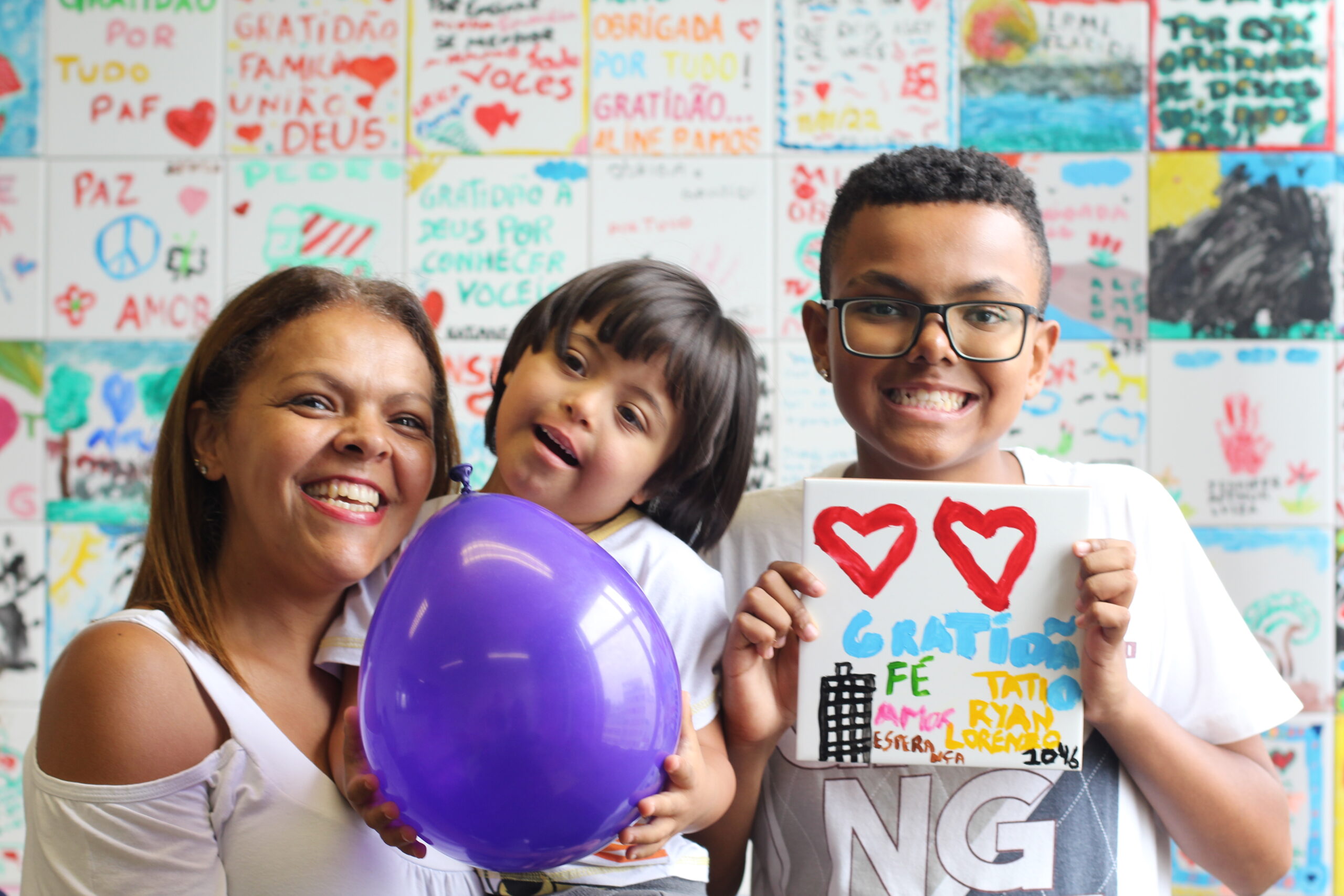
She speaks joyfully about this achievement, especially because she will finally be able to stop renting and have a place of her own to leave to her children. “It’s hard to work all month knowing you’ll have to hand over more than half your salary to someone else. And now I think that at least I’ll be paying for something that’s mine, that I’ll leave to my children when I’m no longer here,” she explains.
This joy over a new home has also become part of the life of Márcia, a grandmother of eight who is also supported by IC. Through CDHU and with the support of the social work area, she was finally able to secure her own space.
This achievement marks an important milestone in the life of Márcia’s family, who lived in the Pantanal area of São Paulo and suffered from the neighborhood’s conditions. “I’m a very happy person, very grateful along with my daughters that we’re going to have a new home,” says Márcia.
Now, Tatiane and Márcia are preparing for this new phase while they wait for their homes to be handed over. But the hope of moving to a new place has already made a difference in each of their lives, as they can now dream of a more dignified place to live.
A right that needs to be more accessible
Although these programs are very important for the population, Franciele points out that she has faced difficulties in obtaining information from the agencies responsible for each of them. She says that when families have questions, it is hard to find answers, and she has to look for ways to help them.
In this context, the role of the third sector in the right to housing has also been important in ensuring people live in adequate places. Organizations working on building and improving homes, advocating for rights and providing legal guidance have made a difference in the lives of hundreds of people by helping them secure basic living conditions.
The security of being in a welcoming home with the necessary resources also brings a sense of belonging to the territory, which is important for a family’s development. In this way, housing stops being just a physical space and comes to represent protection and identity.