Eng

15 years of IC: a methodology focused on care

In October, we are celebrating 15 years of Instituto C (IC). When we look back, we are proud of much of what we have built in partnership with many people and organizations. One of these achievements is, without a doubt, our own methodology, designed to meet the specific needs of the families who come through our hubs.

That is because, to guarantee access to rights for families with children and adolescents at social risk, IC needs to offer systematic care, built on a well-planned methodological foundation and delivered by a qualified team that takes into account the conditions and needs of each territory where it works. After all, to achieve its intended impact, any social action must be accompanied by good organization and planning.


What does methodology mean?

Methodology is the combination of methods and paths needed to achieve a goal. In academic research, for example, methodology refers to everything the researcher had to do to reach the results (such as interviews, questionnaires and data analysis).

In our context, it is simply the way we carry out our work. In other words, it is the set of processes, techniques and tools we use every day to achieve the social impact we seek. Some examples that are part of a third-sector organization’s methodology are:

    • Which days it carries out its routine activities;
    • How it calculates the indicators of its work;
    • For how long it supports each person served.

The origins of IC’s methodology

Fifteen years ago, Instituto C was born as the São Paulo unit of Instituto Dara (an organization from Rio de Janeiro that, at the time, was called Associação Saúde Criança, ASC). For this reason, our methodology was the same one Dara had built to serve families in the other states where it operated: the Family Action Plan (PAF)*. This plan was built together with each family, so that the child with a diagnosis could overcome immediate difficulties and develop in the medium and long term.

*Instituto Dara’s methodology has since evolved and is now called the Dara Method.
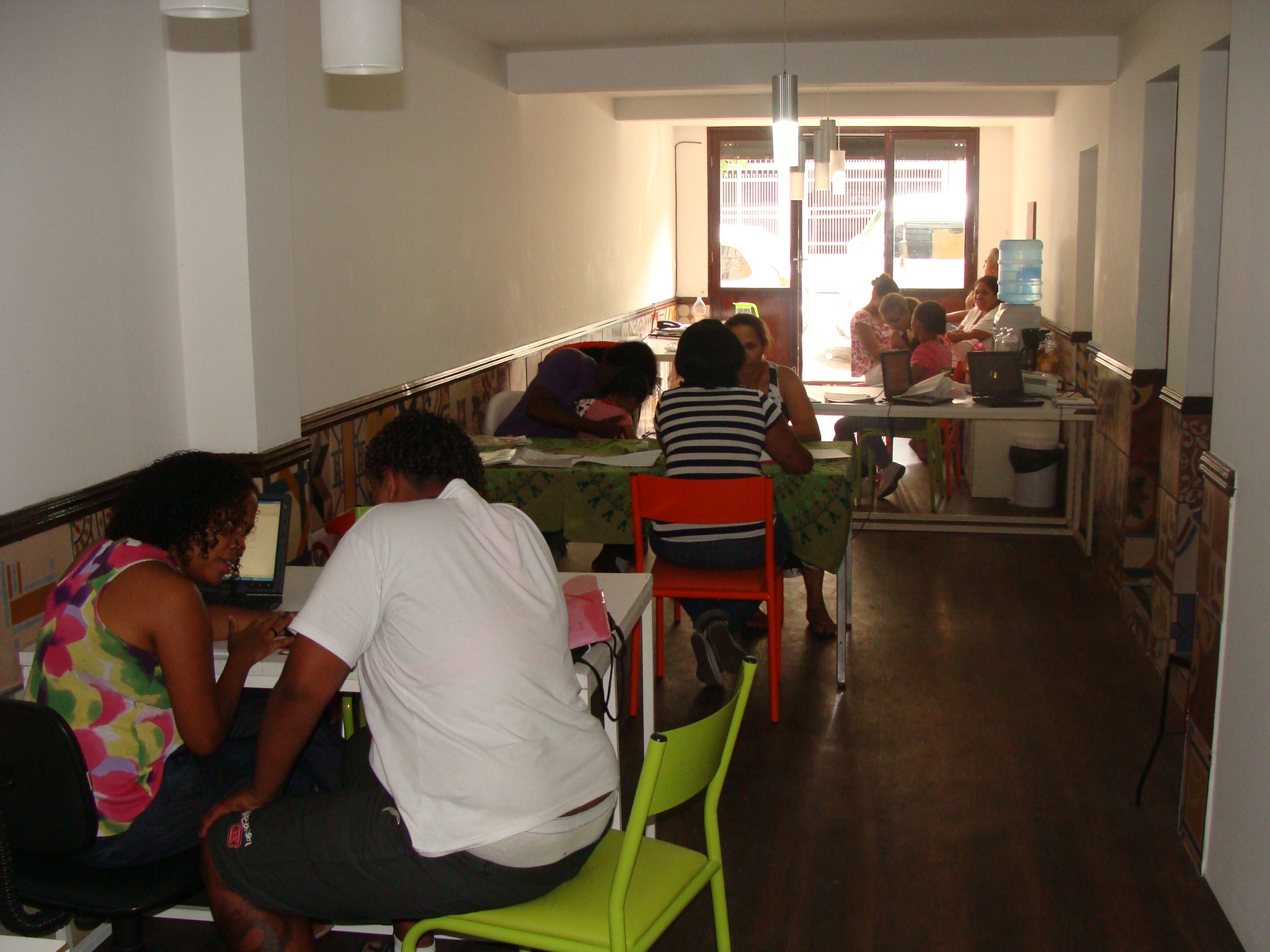
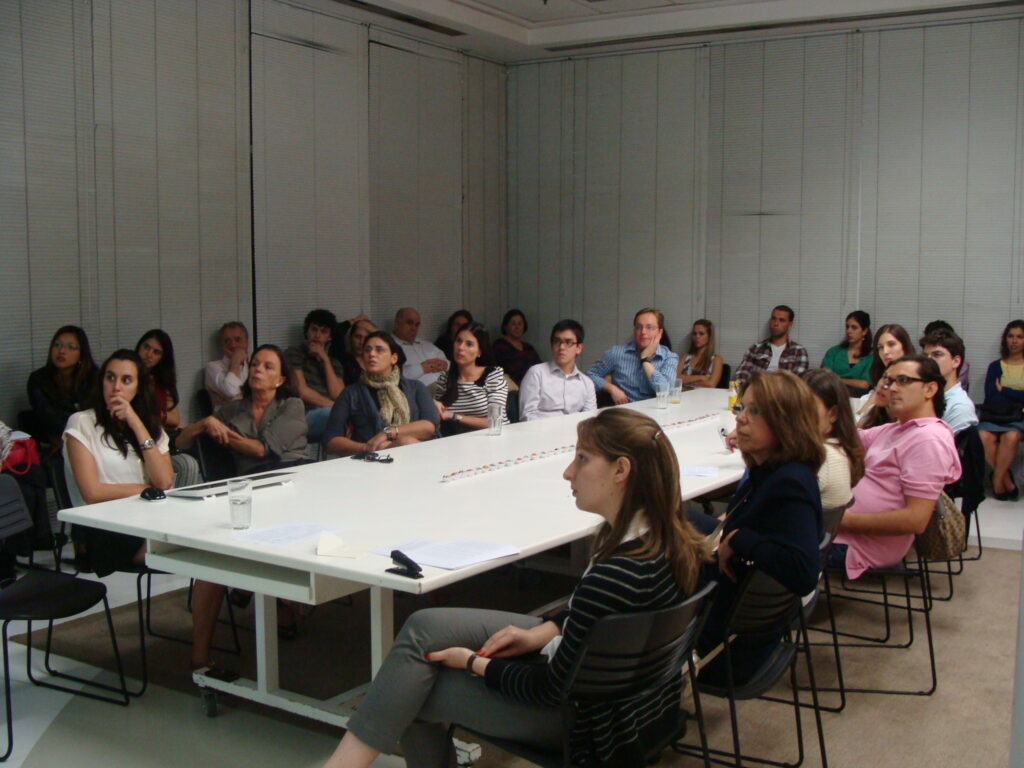
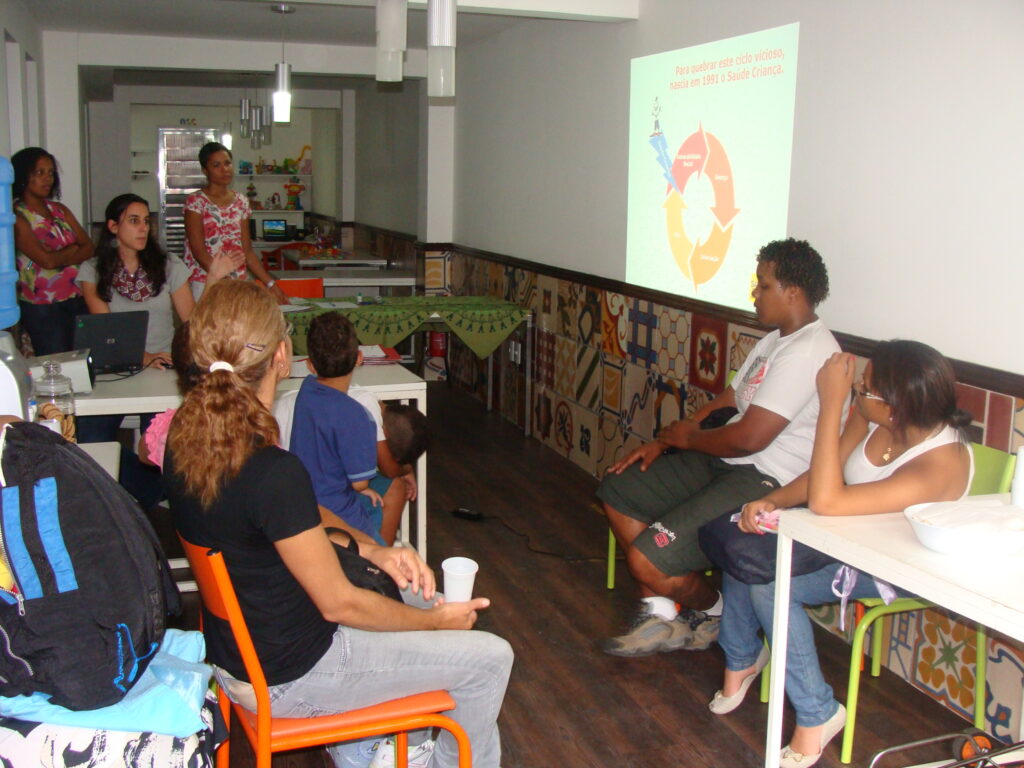
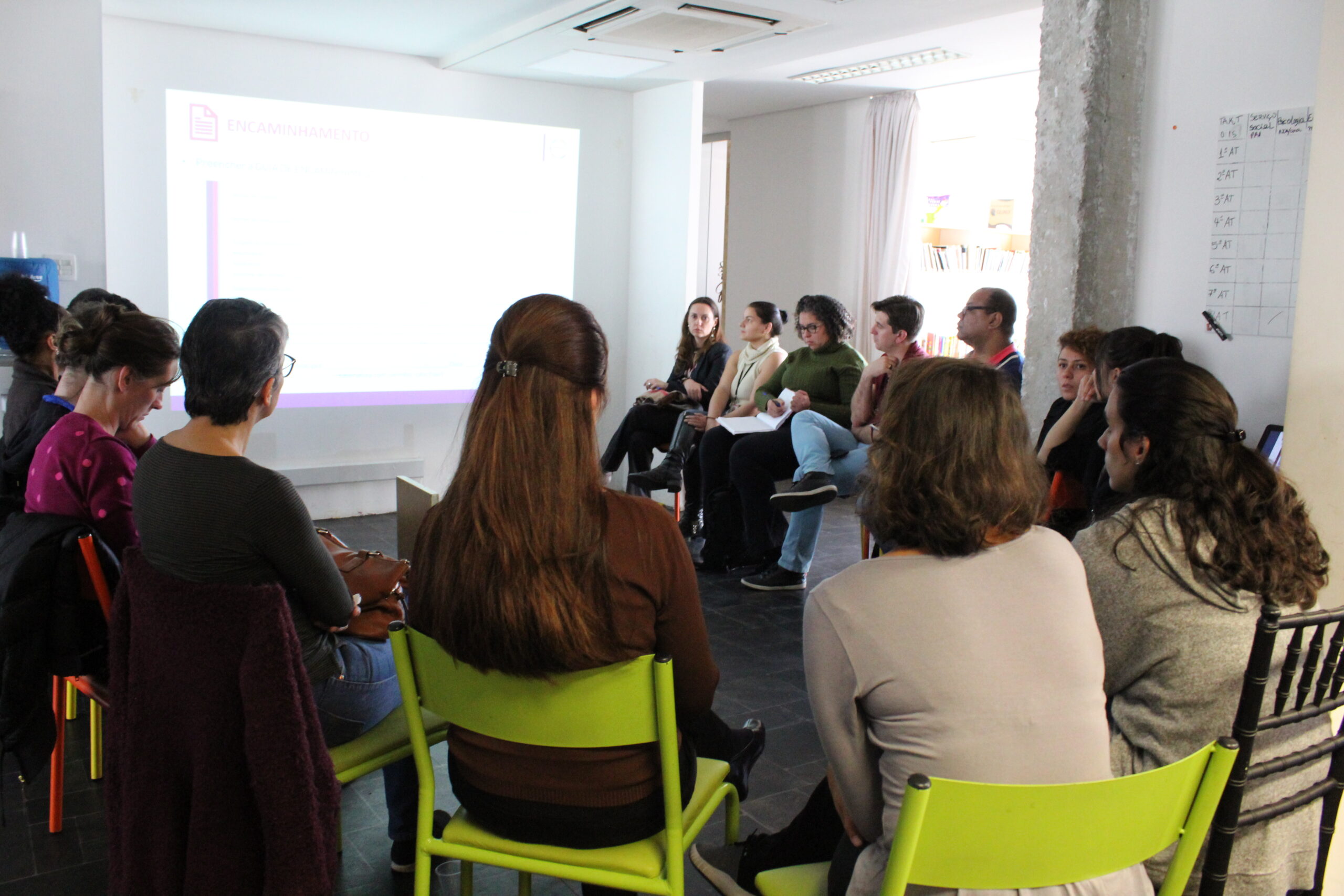
Round of services at Instituto C’s first headquarters, in 2012

Many elements of our methodology were therefore different from what we have today. For example:

  • Our services were aimed at families with children with serious or rare diagnoses, in situations of social risk.
  • These families were referred by partner hospitals, especially Santa Casa, near our headquarters.
  • Volunteers played a very strong role in providing services to families.
  • Each day, there were two group sessions (one for the morning families and another for those who came in the afternoon). Afterwards, each family sat down at each of the service areas and was required to spend 15 minutes at each table. At the end, they collected benefits (such as a food basket) and left, returning the following month.

What began as support for families facing a child’s or adolescent’s illness came to include other dimensions of family life, such as income generation, early childhood development, education, strengthening bonds and access to rights,” says Nayara Oliveira, Institutional Development Coordinator at Instituto C.

Methodological changes

The multidisciplinary and holistic care for the families who come to us, which already existed back then, remains alive today. But over the years, our methods have changed to respond to emerging needs.

The technical team, for example, began to point out that the length of the sessions was no longer enough to welcome families and give them the guidance they needed. Volunteer-based services also proved unsustainable in the long term, requiring more professionals to be hired for the technical team. The requirement to serve children with complex diagnoses was also reconsidered, and today we also welcome families with children who have no diagnosis.

Another change involved welcoming new families. At a certain point, IC realized that we could receive families beyond referrals from partner hospitals, for example through word of mouth. The way we serve families also changed, with the aim of providing more quality time, continuous follow-up, qualified listening and autonomy for each of them.
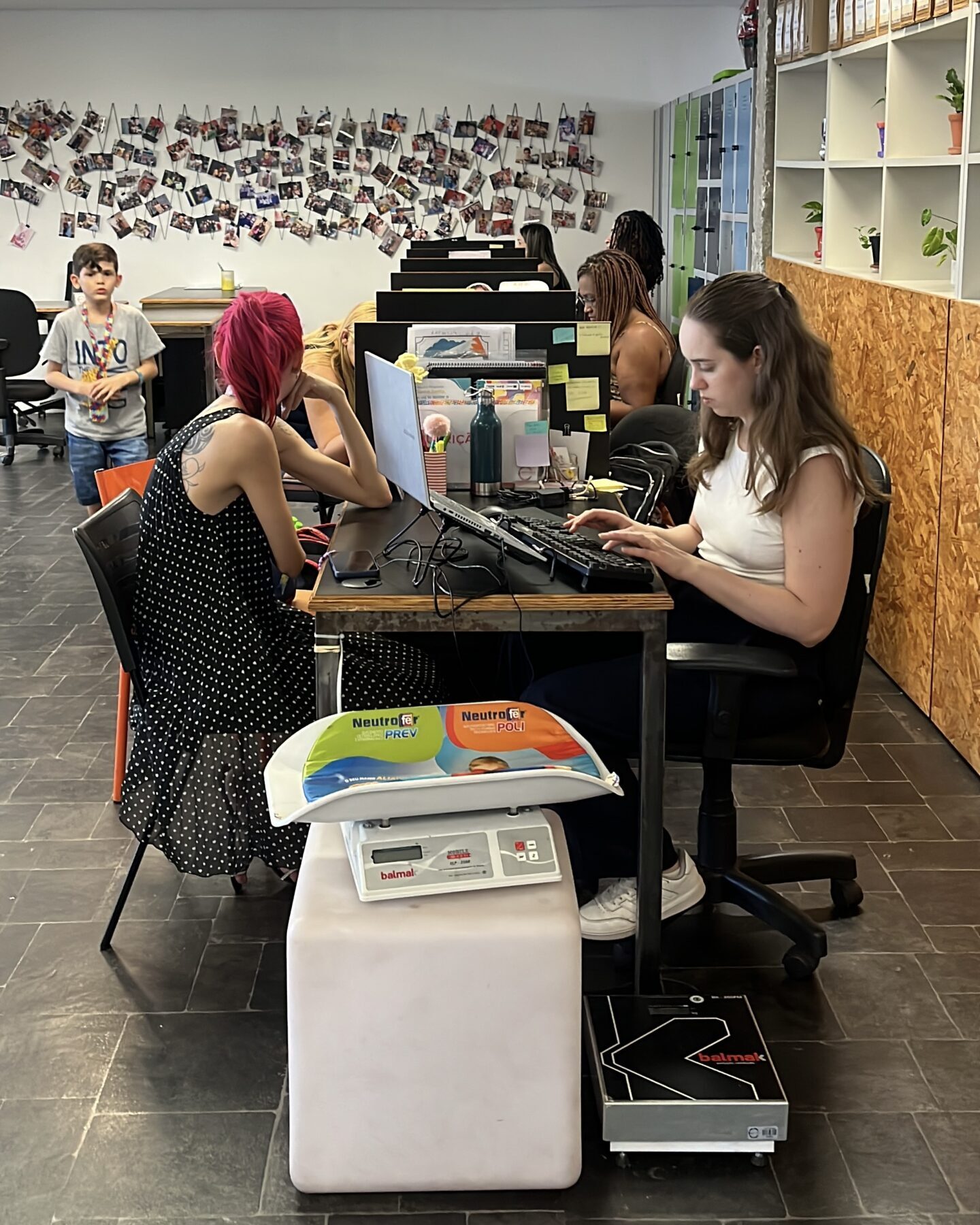
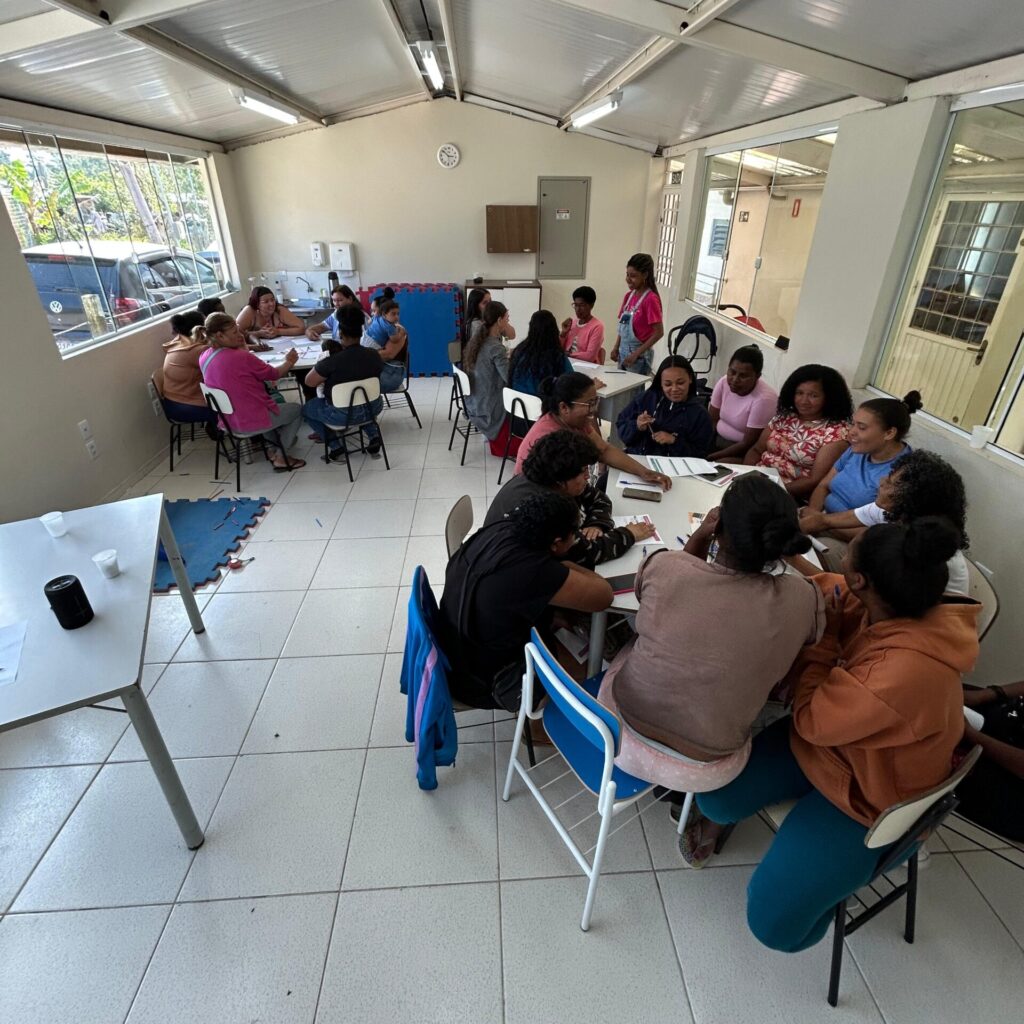
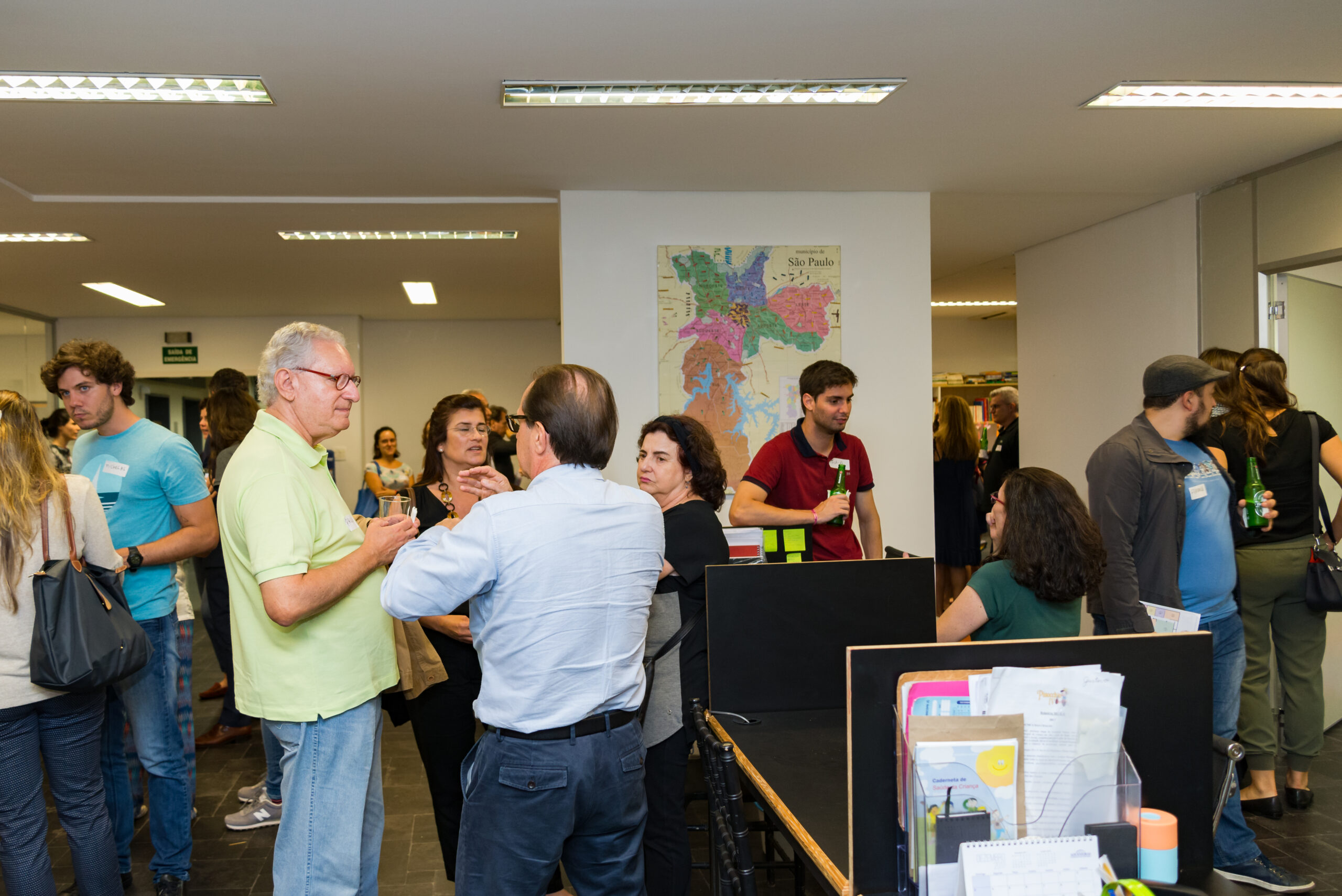
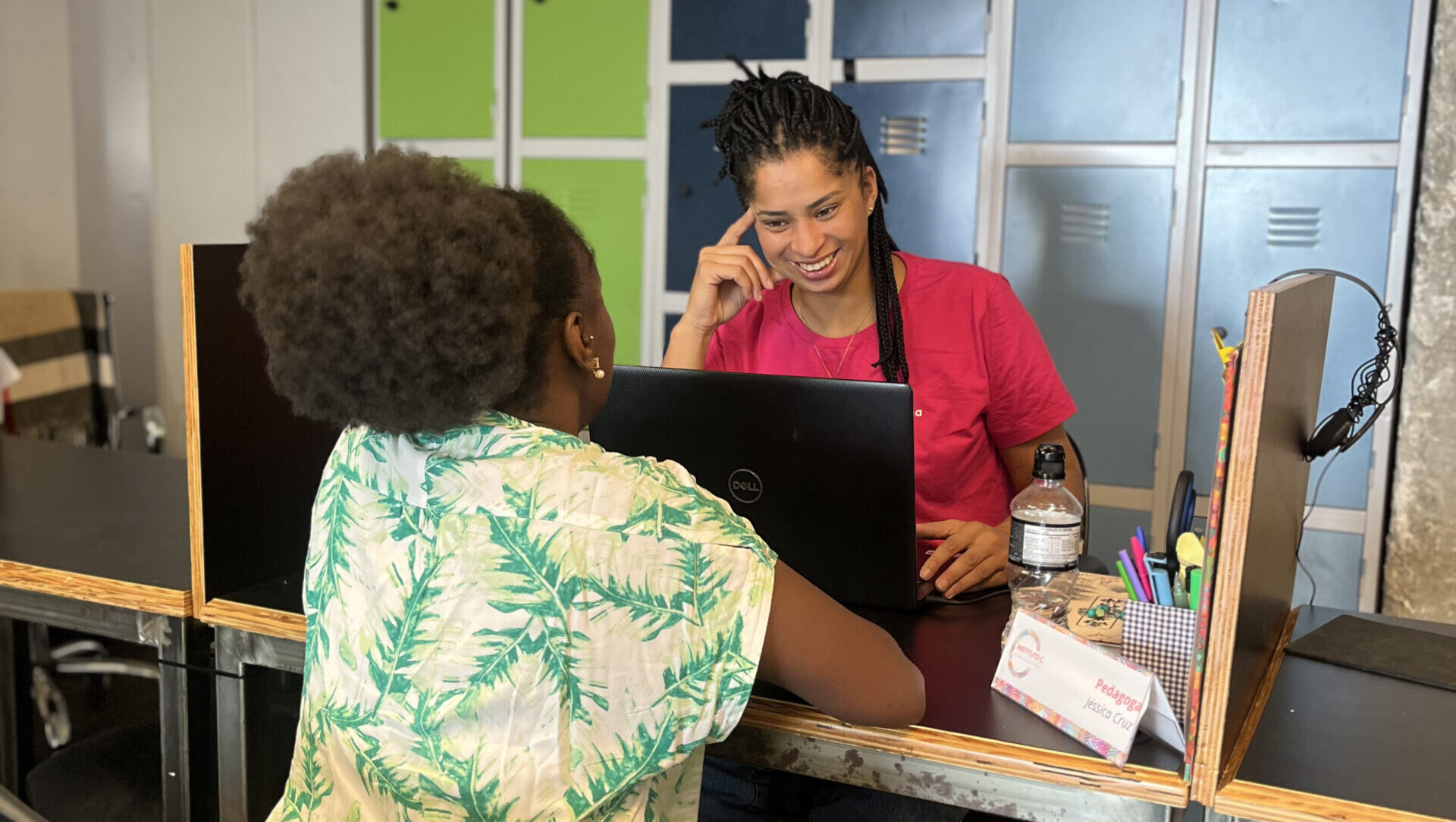
Individual sessions at Instituto C’s current headquarters

A methodology focused on care

Today, Instituto C has its own family support methodology, built on the experience of these 15 years and grounded in the National Social Assistance Policy and the National Care Policy, which was published in 2024 and reinforced the work we were already doing.

To fulfill our mission of ensuring the full development of children at social risk, we identified caring for those who care for them as our main method — and this is one of the most distinctive features of our methodology. We seek to strengthen families (often women overburdened by the invisible work of care), expanding access to rights and holding the State co-responsible for the care of these children.


What is invisible care work?

For each person to work and live a dignified life, someone needs to care for them. This care can be paid and come from companies and professionals (such as doctors, cooks and nurses), but it also happens unpaid at home. Society, in general, holds women responsible for these tasks: cleaning the house, cooking, caring for sick relatives, doing the laundry, and so on. All this work happens every day, but it is not very recognized. When, for example, someone looks at a renowned company director, few people ask: “Who cares for this professional, so that he could get where he is?”


And how do we expand access to rights? When we begin supporting a family, we first understand their needs and then, together with them, seek the necessary paths across different government departments, bringing together in one place information about the various public policies these people are entitled to. This way, families are able to access places in daycare, housing rights, health services and more. This is because, to reduce economic inequalities, we understand that we must consider every aspect of the lives of people living in poverty, not just their income.

How does it work in practice?

Many families come on their own, through recommendations from other families or through referrals from network services, such as CRAS, UBS, schools and other partners. To take part, a family just needs to have at least one child or adolescent, be in a situation of social vulnerability and be interested in the project.

As soon as they arrive at IC, families go through screening, in which a socioeconomic analysis of their vulnerabilities is carried out. Each family is then referred either to the welcome group or to our waiting list.

A turning point in our methodology came when we understood that the key to offering holistic family support was to assign each family a reference professional from our team. This strategy emerged as we refined our methodology to replicate it in a partnership with Instituto Alimentando o Bem (IAB; learn more at the end of this article). This professional (whether a social worker, psychologist, nutritionist or educator) is responsible for following the family’s various needs, seeing it as a whole. Each family may go through different areas in a complementary way, but it is their reference professional who follows them closely and builds, together with them, the Individual Care Plan (PIA, its acronym in Portuguese).

This plan defines which areas of expertise will support the family (social work, psychology, nutrition, pedagogy or productive inclusion) and how often. The PIA is reviewed every three months, always in partnership with the family, to strengthen their role as protagonists.

Since bonds have always been a priority for IC, we extended the length of individual and group sessions and, in addition, adopted comprehensive follow-up by reference professionals,” highlights Nayara.
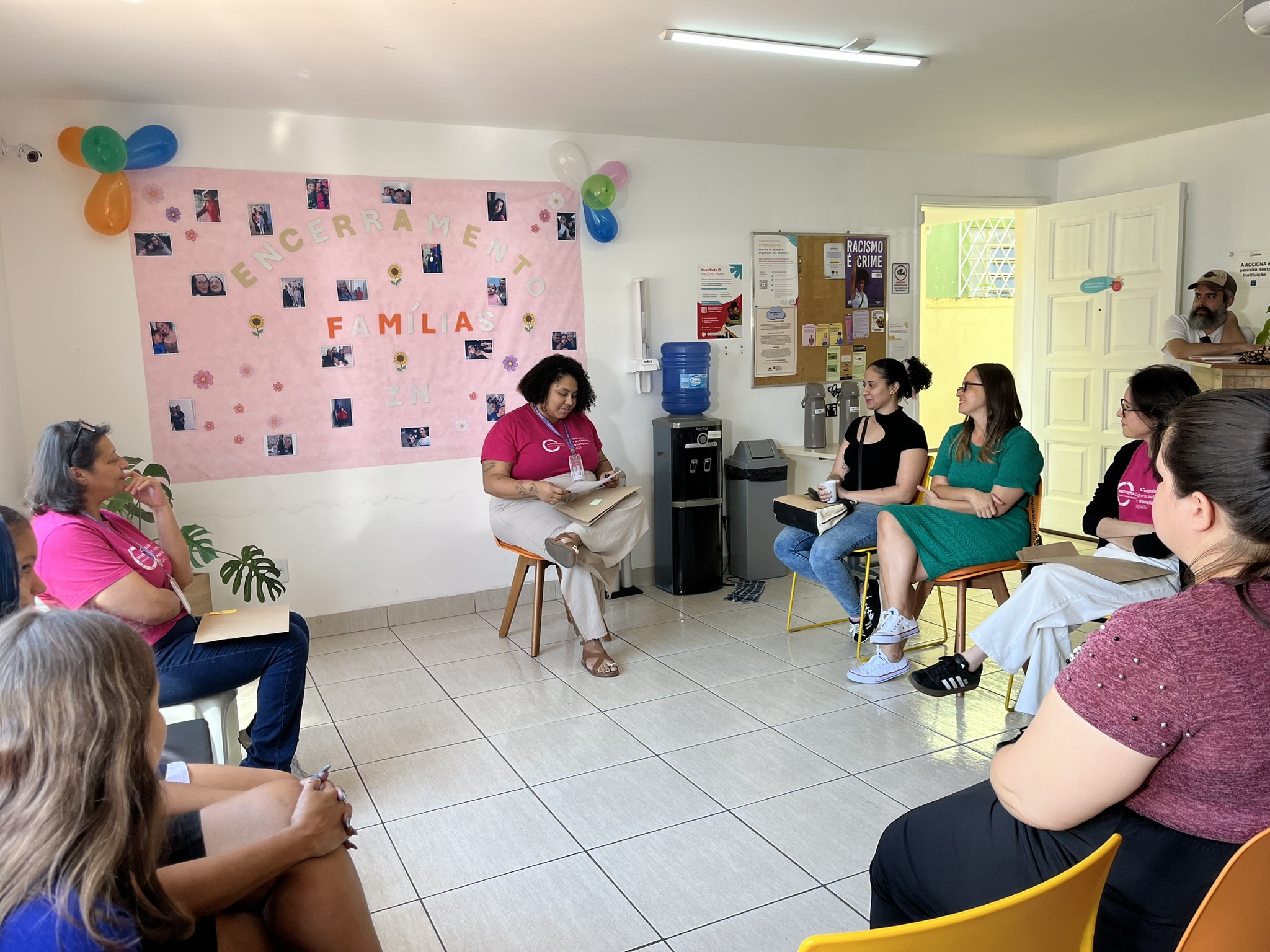
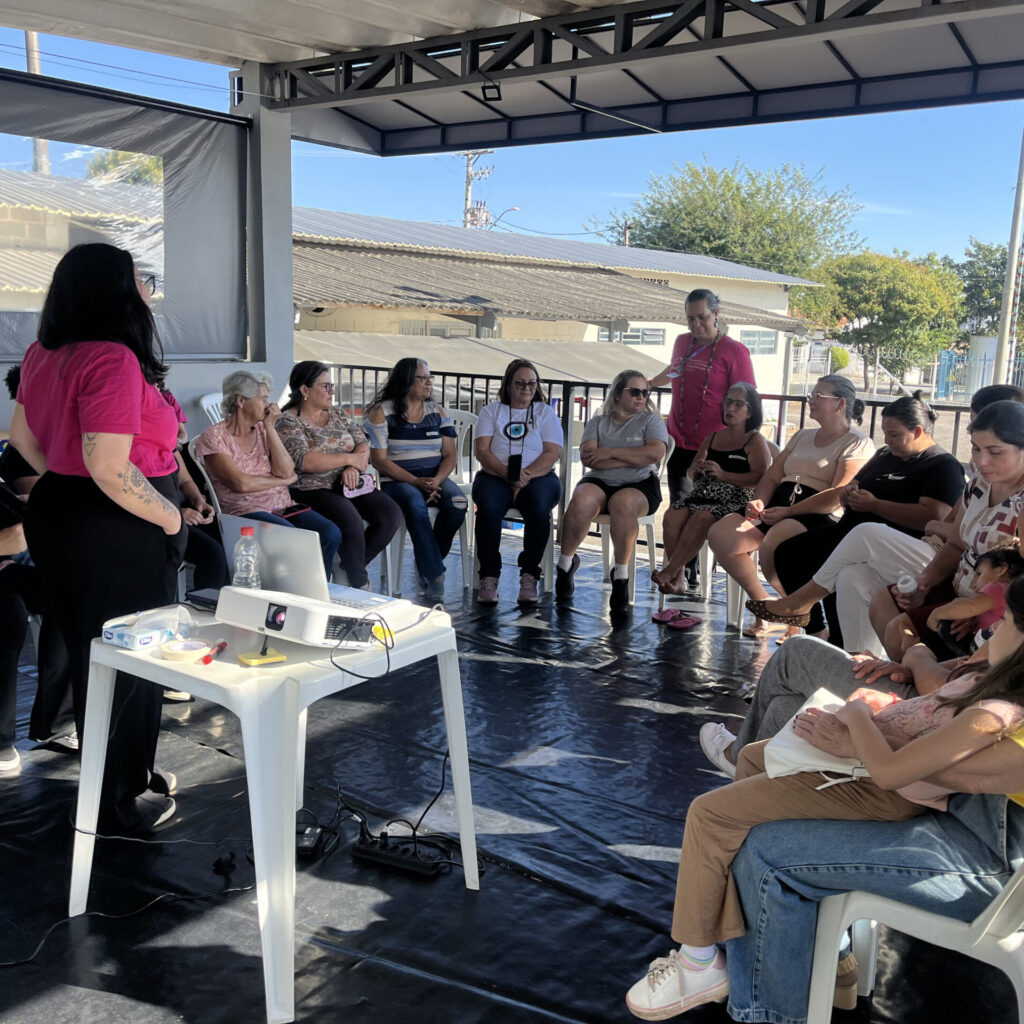
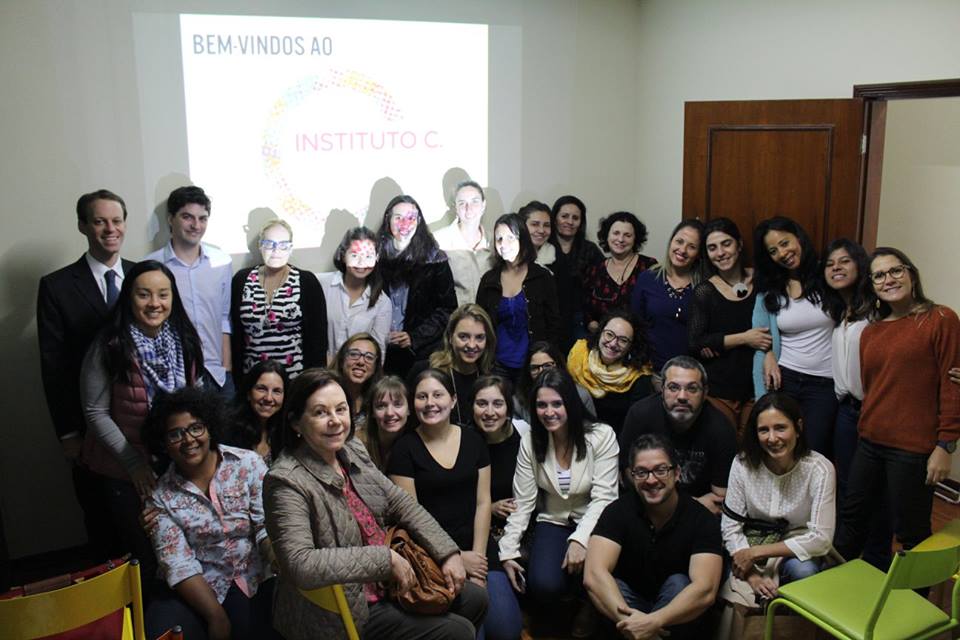
Closing group at the North Zone Hub in the city of São Paulo

In addition to individual sessions, families take part in workshops and conversation circles, as we have done since the beginning, and, at some hubs, children and adolescents have group activities of their own. Benefits such as food baskets are still provided to families who need this support.

Today we offer welcoming and listening attentive to these families’ needs, vulnerabilities and strengths, to co-create strategies for confronting and breaking cycles of social exclusion,” explains Nayara.

Every week, the team meets to discuss cases and think of new strategies, always in coordination with the territory’s service network. Another important tool is our own monitoring system, where each family’s entire journey at Instituto C is recorded. It is there that we carry out screening, build the PIA and record the progress of each session, group meetings, home visits and referrals to the network.

With this information gathered in one place, the reference professional and the other areas can follow each family’s journey together. The system also stores the indicators assessed by the team, such as self-esteem, autonomy and income, which help us understand families’ achievements and adjust care whenever necessary.

Expanding our methodology

In recent years, Instituto C’s expansion has allowed us to take our methodology beyond our headquarters in the city center, where it was first developed. We created other service hubs and learned to adapt the methodology to meet the specific needs of each territory. At the North Zone Hub in São Paulo (created in 2022), our routine includes vocational courses offered by local partners, which complement our services. At the Taubaté Hub (2025), we do not have our own space for group sessions: they take place at our partners’ units. At the Porto Alegre Hub (2025), we are located within a community space funded by Instituto Mari Johannpeter (IMJ), and our services complement IMJ’s home renovation work, as well as including home visits to every family.


Between 2023 and 2026, we established a partnership that allowed us to replicate our methodology beyond our service hubs. Instituto Alimentando o Bem works on the territorial development of mangrove communities in Guarujá, on the coast of São Paulo state. It began its activities in 2020 with an emergency response in the Perequê neighborhood during the pandemic, distributing meals and other donations to residents of stilt houses affected by flooding. However, the organization soon realized that the service it could offer was not complete. It began offering a wider variety of services, until it met Instituto C and realized that our methodology’s holistic care would be essential for these families’ full development.

Thus, what began as guidance offered by Instituto C to IAB soon became a true experience of replicating our methodology. Alimentando o Bem initially hired a social worker to listen to families and get to know the territory and its needs, and soon complemented social work services with psychology and pedagogy, launching the Rede Cidadã (Citizen Network) program.
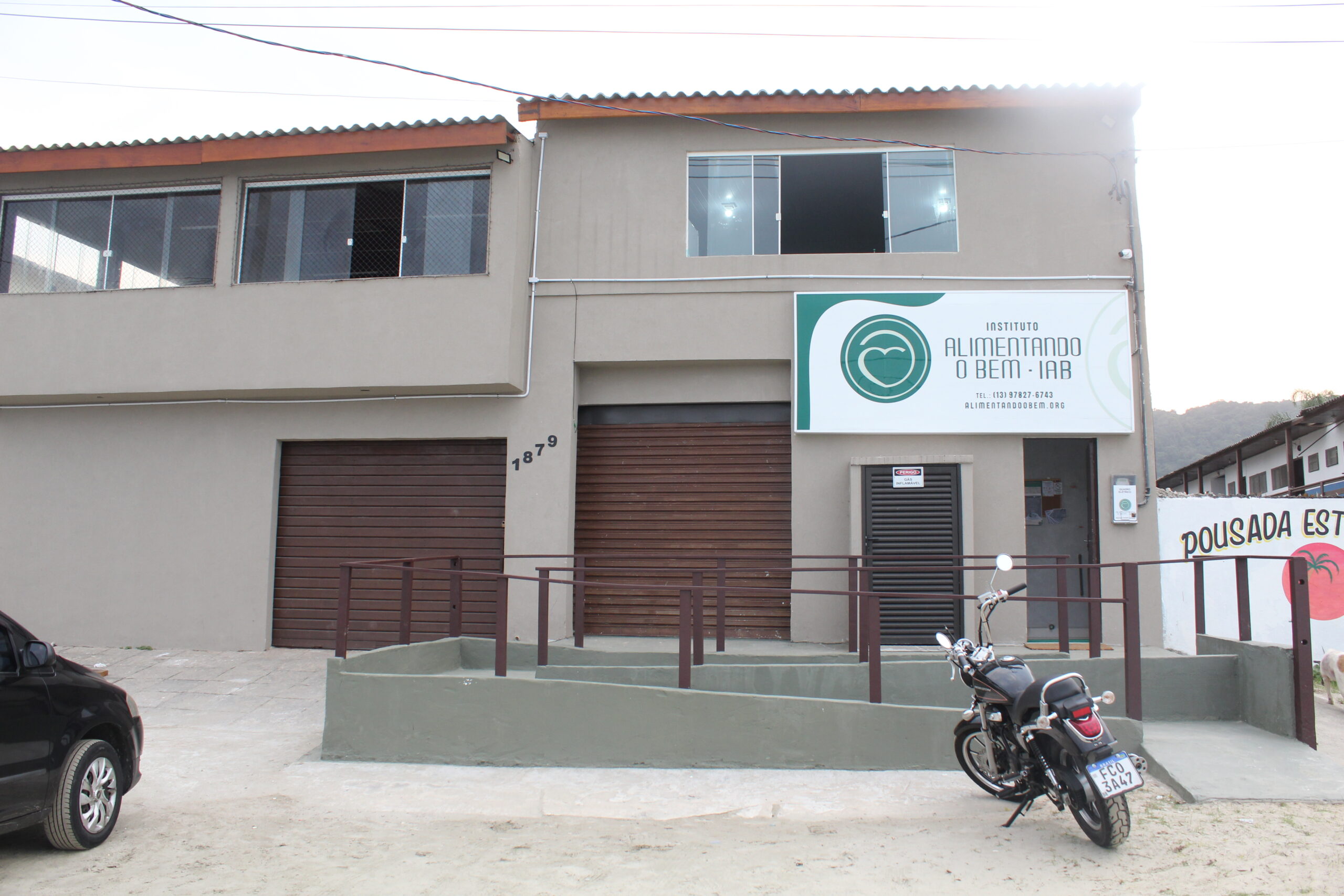
Instituto Alimentando o Bem, in Guarujá (SP)

As soon as the partnership began, the two institutes realized that some adaptations to the methodology would be needed for it to work effectively in Guarujá. There, families from different projects (some with no planned end to their cycle) began taking part in Rede Cidadã. And since they had no expected date for leaving the Institute’s services, these cases made it harder to interpret the indicators collected by the system. For this and other reasons, IC developed a new version of the system so that it could efficiently monitor the services in Guarujá. Another relevant difference was that Alimentando o Bem was open to all families in the region (especially women), not only those with children and adolescents.

The experience in Guarujá was a great learning experience for Instituto C. By adapting our methodology to another territory, we also started to look more closely at our own way of doing things,” says Nayara. “The reference professional is a good example. There, each family had a professional who followed its entire journey, and I soon realized that this approach would also strengthen bonds and continuity of care for families in São Paulo. That’s how we brought this practice to our hubs.”

Rede Cidadã left important results for Alimentando o Bem. It was through the program that the Institute recognized itself as a basic social protection organization and obtained municipal and, later, state social assistance certification. It began taking part in network meetings, hosted meetings of the Municipal Social Assistance Council and, since early 2025, has hosted the CRAS once a week at its facilities, since the nearest center is far from the community. Between 2023 and 2025, the indicators tracked in the system showed an increase in families’ access to social assistance services and the health network.

Instituto C also learned a great deal from this experience. In fact, it was from it that we created a new area of work dedicated to multiplying our methodology and training partner organizations.

Each territory has its own needs, and Guarujá showed us that taking our methodology to other places requires listening and adaptation. Today, before starting a new partnership, we carry out a socio-territorial assessment and seek to understand what forms the foundation of our work and what can change in the way we do it. That way, we can share what we’ve learned and ensure that more families, in different territories, receive holistic, high-quality care,” adds Nayara.
Eng

15 years of Instituto C: how it all began

The story of Instituto C begins before its official founding, in a restlessness that accompanied Vera Oliveira in her daily work. With a degree in Public Relations, within Social Communication, she spent five years in market research, helping brands plan the launch of new products — for example, estimating how many units a new version of mayonnaise would sell in its first year.

The work had method, logic and process, and Vera liked the company and the people. Even so, something didn’t fit. “I’d go to work asking myself: ‘What am I doing with my life?’” she recalls. “Deep down, I thought: maybe the world doesn’t need another soda flavor or laundry detergent.”

Volunteering had been part of her life since adolescence, through campaigns, charity competitions, food basket drives and church-related activities. Her view of the third sector, however, was limited: she saw NGOs as small, charity-based initiatives, with no room for careers, methodology, management or expansion. She would tell her friends that one day she would have a great idea and start a social business.

Meeting Saúde Criança

It was in this context that Maristela Correa, a friend of Vera’s who was then working in advertising, introduced her to another Vera, Dr. Vera Cordeiro, founder of Saúde Criança (now Instituto Dara), in Rio de Janeiro. The organization already operated in several cities across the country, but not in São Paulo, focusing on supporting families with children in vulnerable situations and with health issues.

What caught Vera’s attention most about Saúde Criança was its multidisciplinary view of poverty. They understood that a child’s illness was often also related to social conditions: lack of income, inadequate housing, food insecurity, difficulty accessing rights and weakened family bonds. “And all of that made a lot of sense to me,” she says.

So she took a day off and went to Rio to see the project. As soon as she arrived, Dr. Vera Cordeiro introduced her to the team as the founder of Saúde Criança São Paulo. “I was completely speechless. I said: ‘No, Dr. Vera, I think you’re mistaken. I just came to visit.’”

The introduction was repeated throughout the day. Vera Cordeiro called on families to tell their stories and showed the services, areas and methodology. In the afternoon, she gathered the heads of different departments to explain what would be needed to open a social franchise, such as a board, a partnership with a public hospital, a minimum structure and a support network. “I thought: ‘She really didn’t understand. Tomorrow I’m going back to my job!’”

Vera returned to São Paulo with a pile of manuals and materials, wondering whether it would all just become more paper stored away in her bedroom.

The decision

The next day, Vera’s boss called to tell her that he had resigned and was leaving the company. Facing the prospect of starting a relationship with a new leader and explaining, once again, that she dreamed of a different path, she answered without planning to: “Me too!” He wanted to know whether she was going to another research institute or was going to pursue her dream. “I’m going to pursue my dream,” she said.

Right then, she wrote to Dr. Vera Cordeiro accepting the challenge of starting the project in São Paulo and called Maristela, the friend who had introduced them. At the end of the day, the two talked and agreed to work together on a minimum structure. The agency would look for clients to raise funds for the Rio organization and would take the opportunity to ask for support for São Paulo as well.

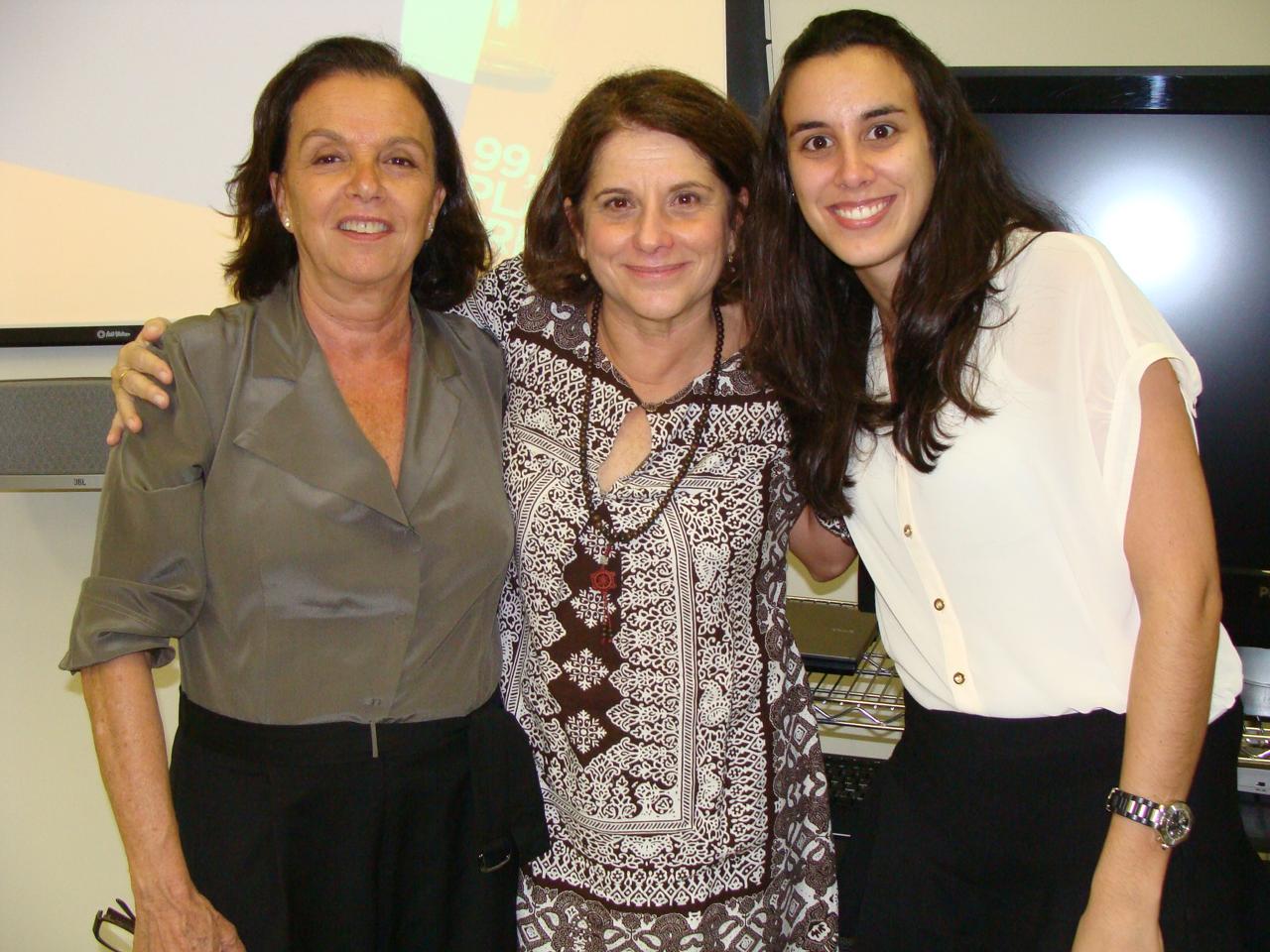
From left to right: Maristela Correa, Dr. Vera Cordeiro and Vera Oliveira

With the support of a pro bono consultancy, the initial plan was born, based on the Rio methodology: serving 50 families by the end of the first year, with five new families joining each month. For that, they would need a social worker, a space, resources to support the families and a partnership with a public hospital responsible for referrals.

The partnership with Santa Casa and the founding

The next step was to seek a partnership with Santa Casa, one of the most challenging stages at the start. “I was a young woman of 24, 25, with no contacts at any hospital, trying to open doors,” Vera recalls. The process went through the pediatrics department, the ethics committee and the hospital’s board, with great care regarding the use of Santa Casa’s name as an NGO partner. After six months, the answer was yes.

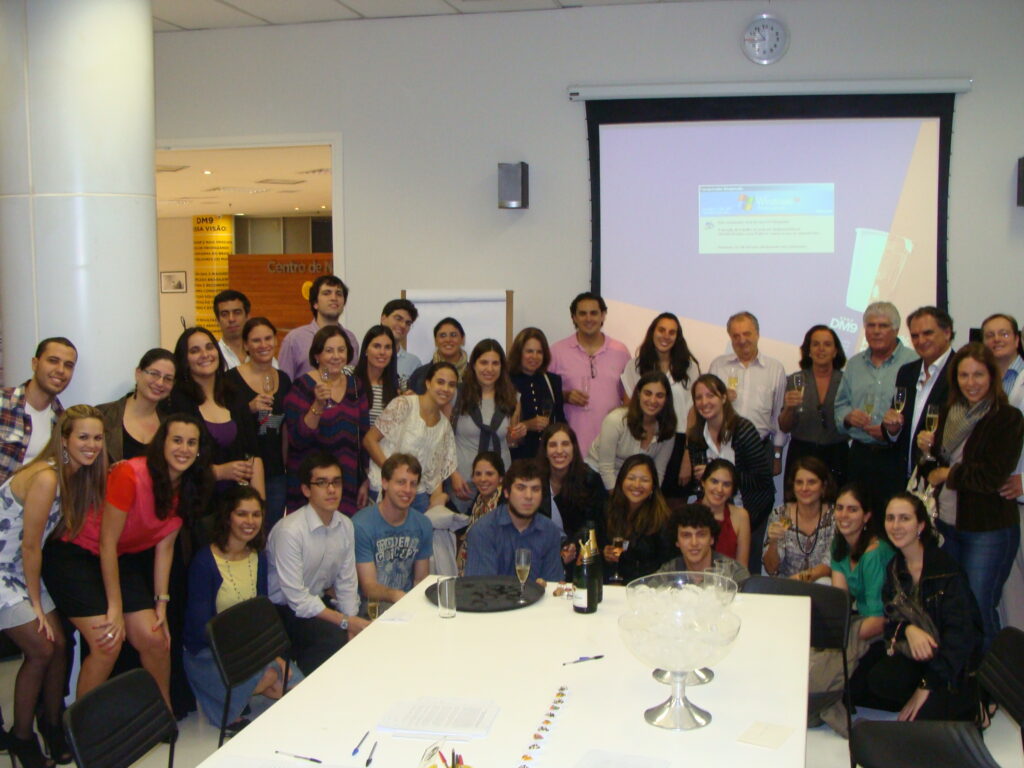
Our founding assembly took place in a space lent by the agency, attended by Dr. Vera, who came from Rio, and by around 40 to 50 people, including friends, family and those close to us.

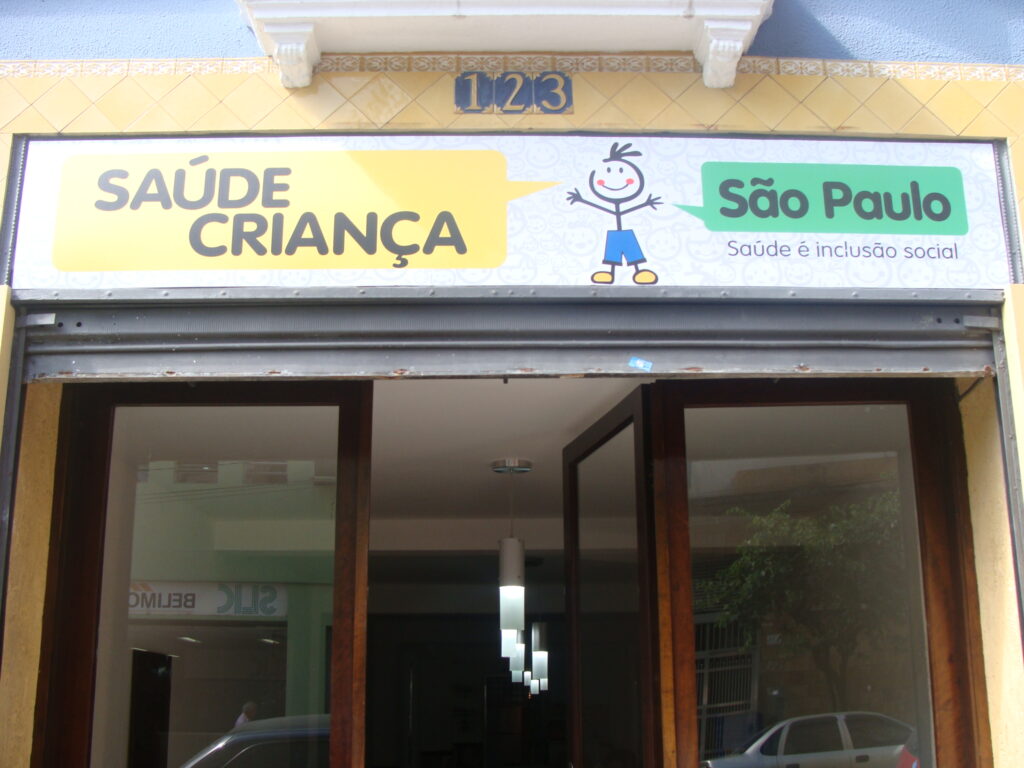
That is how Saúde Criança São Paulo was born, on October 12, 2011, in partnership with Santa Casa. That day, Dr. Vera told the story of the organization in Rio, and Vera Oliveira shared her dream and her hope of building in São Paulo work capable of transforming families’ lives.

Activities began the following year, serving families with children with chronic or serious illnesses referred by public hospitals in São Paulo. The foundation of the work was the Family Action Plan (PAF), a social technology developed by Saúde Criança.

The first resources

After the founding, they needed to rent a space, hire a social worker, buy items for the families and structure the services, all with no money in the bank. Saúde Criança offered initial support for six months, which was important but not enough for everything that needed to be done. “That’s when I began to understand, in practice, what fundraising meant.”

Vera registered the Institute with an organization that connected philanthropic families with social projects, without much expectation. A few weeks later, she learned that the Jereissati family was interested in the proposal. The first conversation brought a surprise: the family wanted to support the initiative financially. “It was a turning point.”

At that point, the organization didn’t even have a bank account. While renting its first house, in the Santa Cecília area, near Santa Casa, Vera sent emails to friends asking for help with the renovation and tried to open an account.

For a newly created organization, it was an enormous challenge: banks asked for a donor history that did not yet exist, and without an account it was impossible to receive donations. Little by little, everything fell into place, and that first donor family still supports Instituto C to this day.

I’m fully aware that none of this would exist without a few pillars: the methodology brought by Dr. Vera, this family’s support at the beginning and all the people who have passed through the institute and helped build our way of doing things,” says Vera.

Growth and adapting to the territory

In its very first year, the São Paulo unit became Saúde Criança’s largest franchise. The network brought together units from different cities in twice-yearly meetings to exchange experiences and lessons, and through this interaction São Paulo’s particular characteristics became increasingly clear.

The methodology was gradually adapted to the reality of the city’s public policies. The team understood that the best path was to build more comprehensive solutions for families together with public policies, coordinating with the government and other organizations in the social assistance network. The approach to productive inclusion also changed: before offering vocational courses, it became essential to understand each family’s financial reality, such as how much they earn, how much they spend, and what their possibilities, challenges and aspirations are.

This phase also saw the first projects beyond the PAF. In 2014, Atelier C was created, focused on income generation for the mothers served, with training in sewing and crafts, product creation and sales at bazaars. That same year, the PAF gained a service station dedicated to early childhood, to prevent risks to children’s development.

From Saúde Criança São Paulo to Instituto C

For this new phase, the board began to include people with more experience in the third sector, fundraising and strategic planning. From these conversations, the need to discuss the social franchise model and the best path for the future became clear.

In 2016, a reflection process with the network put three options on the table: keeping the format while reviewing governance; breaking away completely; or continuing with the methodology under a new brand, with the autonomy to develop other projects and expand according to the local reality. The third path was chosen.

“We didn’t want to break with our history,” Vera explains. The intention was to honor what had been learned with Saúde Criança while recognizing that the work in São Paulo had gained new audiences, new fronts and a methodology with its own contours.

The transition was carried out carefully and built collectively, through conversations with Dr. Vera, the board, the team and volunteers. Deadlines, governance changes and updates to systems, website, logo and communications were defined. On October 12, 2016, exactly five years after its founding, the organization was renamed Instituto C.

The name was also born with the team. Among the ideas were Instituto Criança (Child), Instituto Cuidado (Care) and Instituto Coração (Heart). At one point, only the letter C remained, and from it came the whole concept: Criança, Cuidado, Cidadão (Child, Care, Citizen). A place that, through care, guarantees children their rights as citizens. The new brand represented an institutional turning point, from which the institute began to look at its methodology, identity and future with greater autonomy. With the new identity, the scope of its work expanded: the institute began serving families with children at social risk, no longer limiting its services to health issues.

A new headquarters

In 2017, the house on Rua Fortunato could no longer accommodate the work. The organization, which first rented only the ground floor and later the upper floor as well, faced overcrowding on service days and flooding in the toy library on rainy days. There was also a growing sense of vulnerability, as it was a street-front house with an open door and little security for the team and the families.

The search for a new space had one premise: everything on a single floor, to help bring the team together during a period of many changes. Properties like this, however, were expensive and in high demand from stores, supermarkets and large companies.

One Monday, the team arrived to find the house had been robbed. All the computers were taken. The server was disconnected but left behind; had it been taken, much of the organization’s history would have been lost.

That day, the decision was made: it was time to move to a commercial building. The team knew the move could create an initial barrier for families, but understood that everyone’s safety came first and that closeness could be built through communication, welcoming and bonds. That is how Instituto C arrived at its current headquarters in the city center.

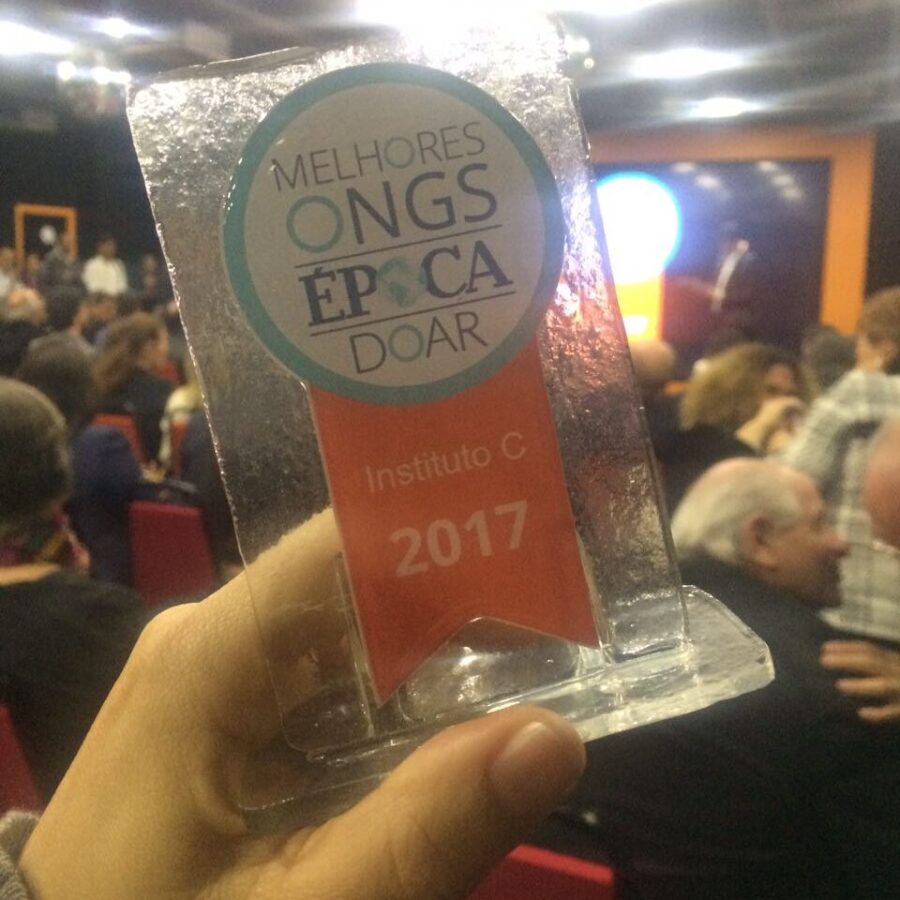
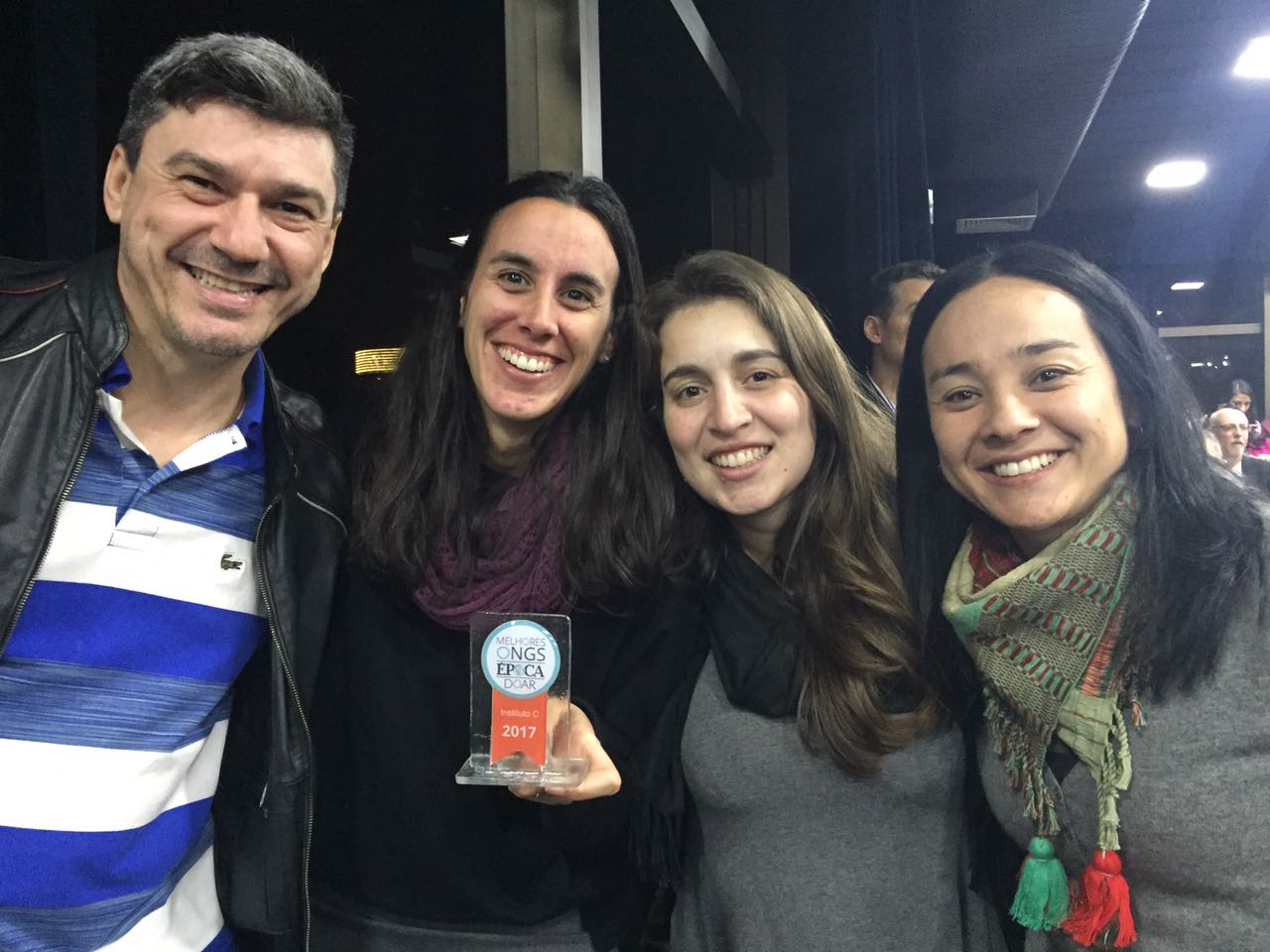
In the same period, Instituto C was recognized (the first of nine times) by the Best NGOs Award (Prêmio Melhores ONGs), from Instituto Doar, a benchmark of recognition in the third sector. This strengthened the change in brand, governance and audience. By then, the Institute already had different fronts: the PAF, focused on families with children with health issues; Early Childhood; and Educação em Rede (Networked Education), launched in 2017, with school partnerships and a focus on children and young people with difficulties in their school development.

Open doors

Strategic planning, carried out every three years with the participation of the team, the board and partners, continued to transform the institute. In 2019, a major shift came: the decision to operate with open doors, welcoming families who came on their own initiative and through referrals from other families, in addition to referrals from hospitals and partner institutions.

For years, the number of families served fluctuated with the volume of referrals, sometimes many, sometimes few. With this opening, that instability disappeared, especially at the Central Hub.

A collective construction

Throughout its history, Instituto C has continually transformed itself. It was born from a powerful methodology and grew through listening, adaptation, innovation and the people who passed through it. Every member of the team, every family, volunteer, partner and territory helped build what the organization is today.

According to Vera, the goal remains the same: offering families a better quality of life, autonomy and access to rights. And that begins within the organization itself. “There is no care for others if we don’t care for those who provide care,” she says.

Care needs to be in the methodology, but also in the way we work, the way we relate to one another, the way we make decisions and the way we build the future,” she adds.


This is the first in a series of special articles for Instituto C’s 15th anniversary campaign. In the next article, we will talk more about the evolution and replication of our methodology, based on direct experience with families.

Eng

Yellow September: rest is a right, not a privilege

Do you remember the last time you had free time in your schedule, with nothing to do?

For many people, work takes up most of their time, demanding almost total mental and emotional effort. The overload of roles, inside and outside the home, piles up in their routine, especially in the lives of specific groups in society, such as single mothers living on the peripheries.

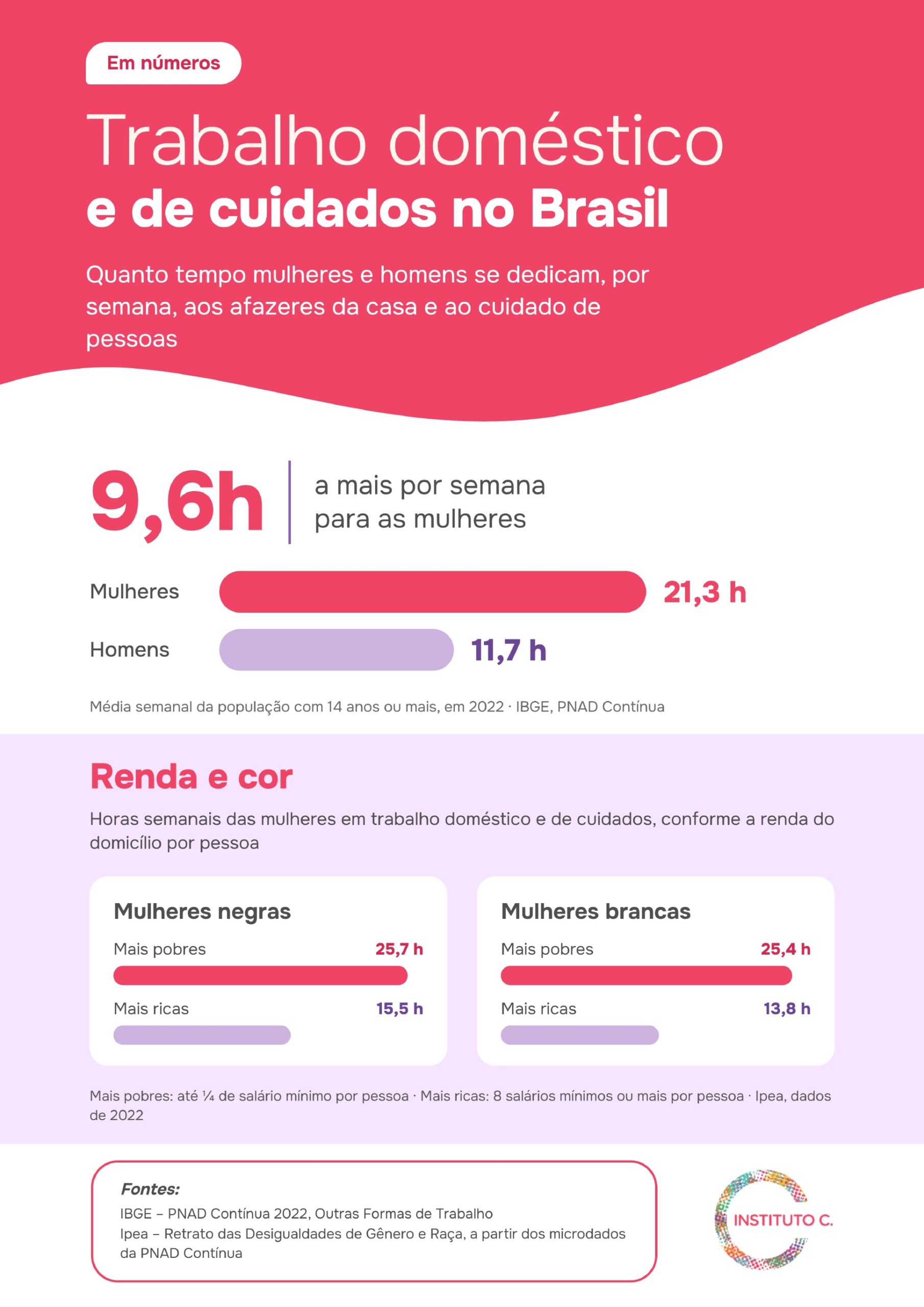
According to 2022 data from IBGE’s Continuous National Household Sample Survey (PNAD), women spend almost ten more hours per week than men on household chores: 21.3 hours for women and 11.7 hours for men. An analysis by Ipea based on the same microdata shows that the number of hours spent on domestic work can increase by up to ten hours for poorer women, with an even greater variation when we consider these women’s race.

We can’t leave this out, because those who are rich have far more resources. There’s no way to compare, for example, a celebrity who has more than one nanny at home with the women supported by Instituto C, who often have no support network and therefore few opportunities to rest,” notes Camila Alves, a psychologist on the technical team at IC’s Porto Alegre Hub.

This accumulation of roles adds to caring for children, relatives and the other responsibilities of adult life, a task society keeps placing on women, causing their minds to enter a constant state of alert. In addition, because of the increasingly productivity-driven logic that persists in society, there is a feeling of guilt when doing nothing. “I notice that, especially for people from lower-income backgrounds, there’s this guilt about idleness, you know? As if the person could be doing something productive that would bring in money,” the psychologist comments.

Rest is a basic right

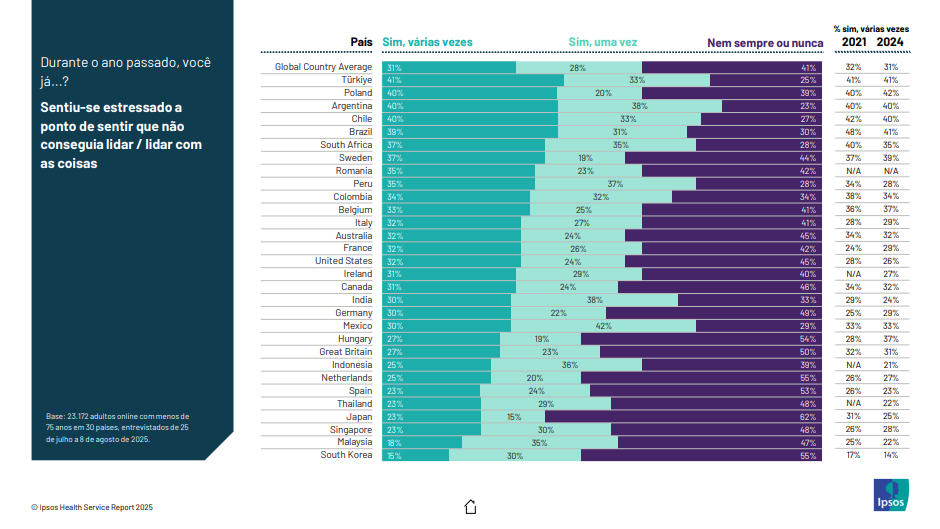
It is no coincidence that Brazil is the fifth most stressed country in the world, according to the 2025 Health Service Report by Ipsos. In the survey, 70% of Brazilians reported having felt so stressed in the previous year that they were unable (once or several times) to cope with their responsibilities. In countries such as Japan, at the bottom of the ranking, this percentage drops to 38%.

From a physiological point of view, the solution to accumulated stress should be simple: a person just needs to rest, finding pleasant pastimes for the mind and relaxing the body. This is a basic right, even provided for by law in our country. In Articles 6 and 7, the Federal Constitution clearly states that every Brazilian has the right to leisure and, if employed, must have weekly time off to rest.

According to the rules of labor law, employment must not cause workers existential harm, that is, harm that affects their social and family life and their leisure time. Precisely for this reason, in May, an update to Regulatory Standard No. 1 (NR-1) — which sets out workplace safety guidelines in Brazil — added psychosocial risks as an occupational risk subject to inspection. In other words, guaranteeing rest is no longer a courtesy from the company; it has become a legal obligation.

The importance of self-care and mental health

But in practice, we know this is not how things happen, and even unemployed people, when they lack a support network, become so overburdened that they go into autopilot, leaving any self-care practices behind. This is an alarming feature of our society that deserves everyone’s attention. We need to demand that governments and employers provide basic conditions for rest and leisure for everyone, because this is a public health issue.

That is what Henrique Akiba, a psychologist with a PhD in neuroscience from USP and a consultant at Instituto Ame Sua Mente, advocates. The institute focuses on promoting a culture of mental health care, with education as its strategic pillar: training teachers so that Brazilian children grow up aware of their responsibility for the health of their own minds. According to the Institute, Brazil needs to find ways to prioritize mental health in every sphere, by raising awareness in society and building cross-cutting public policies.

Resting the mind shouldn’t be just a luxury. Just as these mothers commit to caring for their children, we need to understand that the responsibility for self-care is just as important as caring for the family,” warns Henrique.

Unfortunately, the way society is organized takes rest out of the position of a basic right and turns it into a privilege. In IC’s sessions, Camila says it is very common to meet mothers who barely know what it is like to have a light routine. “Even when we ask a woman whether she has these moments of rest, there’s that laugh, as if to say: ‘Oh, you’re talking about something that’s impossible for me.’ That’s because the lack of a support network and of a slightly more stable financial situation rules out the possibility of rest.”

What happens to a body that doesn’t rest?

When we don’t rest properly, our mind holds on to accumulated stress, like smoke building up inside a broken-down car. And since our body is a single whole, this ends up affecting us entirely, bringing pain, skin irritation, and cognitive, behavioral and socioemotional difficulties. Not to mention, of course, a series of mental health issues, such as depression, anxiety disorders and burnout. “The person starts having difficulty making decisions and regulating their emotions,” adds Henrique.

At some point, the bill comes due, because there’s no way around it, right? We’re not machines. The body keeps sending signals that it needs to de-stress, because it’s much harder to rest the mind than the rest of the body. Because even when you lie down, your mind keeps working,” says the Instituto C psychologist.

Make time for leisure, even if brief

According to Henrique, there are differences between more passive moments of rest, such as watching TV or scrolling on your phone, and pleasurable activities that exercise the mind and body. And both are very important! “Sometimes lying down isn’t enough to recover from more severe exhaustion,” he says. Leisure, then, emerges as a very rich way of caring for the mind and reducing stress levels. You can:

  • Do simple physical activities, such as walking for a few minutes or taking the stairs;
  • Read a book;
  • Do word searches or another hands-on activity;
  • Chat with your neighbors;
  • Take part in communities every week, whether religious or not;
  • Take three-minute breaks throughout the day to close your eyes and breathe;
  • Take a slightly longer shower;
  • Put lotion on your body;
  • Eat a full meal sitting down, chewing properly.

These are some of the possible ways to bring pleasure into life, even amid so many demands. After all, we cannot allow rest to be a privilege guaranteed only to the wealthiest.

We know that overload is a reality and that there’s often no support network. But what can be done within the routine to bring in a little more rest and avoid this collapse?” reflects Camila.

Sem categoria

Maria da Penha Law: 20 years of progress and challenges

Did you know that in August Brazil celebrates 20 years of the Maria da Penha Law (No. 11,340/2006)? This law creates mechanisms to prevent and stop *domestic and family violence against women. It applies to any intimate relationship, such as marriage, dating or even a relationship that has already ended, regardless of whether the people involved live together and of their sexual orientation. And it is not limited to partners: it also covers fathers, stepfathers, brothers and sons.

*See the glossary at the end of this article.

The Maria da Penha Law seeks to guarantee women full protection in cases of violence. In other words, in addition to punishing the aggressor, it:

  • Creates *Urgent Protective Measures (MPUs), such as removing the perpetrator of violence;
  • Prevents new cases from arising (through campaigns and training, for example);
  • Seeks to support women with what they are likely to lack after reporting (such as housing and money);
  • And determines that the response should not be limited to the police: health, social assistance, education, labor and housing services must work together so that women can truly break the cycle of violence.

A lot has changed in the country with the Maria da Penha Law. Before it was enacted, for example, domestic violence was considered a minor offense (that is, of little seriousness) and could be settled with something as simple as handing over a basic food basket. The law also began to recognize as violence what leaves no marks on the body, such as humiliation, control over money, constant surveillance and isolation from family and friends.

To learn more about this law, visit the Instituto Maria da Penha website.


Who is Maria da Penha?

She is a biochemical pharmacist, is 81 years old and was born in Fortaleza (Ceará). In 1983, she survived two murder attempts by her then-husband; in one of them, she became paraplegic after being shot in the back while she slept. Since the aggressor was still free almost 15 years later, she took the case to the Inter-American Commission on Human Rights of the Organization of American States (OAS), which in 2001 held Brazil responsible for negligence and recommended that she receive reparations. The law was named after her as part of these reparations. In 2009, she founded the Instituto Maria da Penha.


In cases of violence, report it!

Many victims do not report out of a sense of shame that, unfortunately, still prevails because of the way this subject is treated culturally. However, asking for protection works, it is fast, and the woman’s own account is enough. According to the National Council of Justice (CNJ), 85% of requests for protective measures received a first response from the courts within 24 hours over the past year; in 2020, the average time was 14 days. The study “Femicide and Urgent Protective Measures”, presented on August 7 by the same body, also shows that, among *femicide cases with available data on the victim, two out of three women did not have an Urgent Protective Measure against the aggressor. Most, therefore, were not protected by the law when they were killed.

The law is effective. What happens is that victims often don’t make use of the law. We usually see many femicide cases, more than cases in which the law worked. That leads some women not to use it,” says Aline Beirão, a social work technician at IC.

What is still missing?

After reporting, many women end up losing income, their support network and even their home, as they had until then depended on their aggressors. This is precisely the support the law seeks to offer victims, even if still insufficiently. “For a woman to be able to break away from violence, she needs a very good State structure to support her,” says Bárbara Lopes, coordinator of the *Women’s Reference and Citizenship Center – Casa da Mulher Brasilândia, which serves women experiencing domestic and gender-based violence and works to prevent new cases in the territory.

According to the coordinator, the fear of not being able to support themselves after leaving is one of the main obstacles today preventing victims from seeking legal protection. Many end up becoming single mothers and need to find a job, full-time school (so they can work), housing, adequate transportation and financial assistance.

In most cases, women who are leaving this cycle have also broken away from their support network. Because they only come to report when they’ve reached the end of the line, without contact with family and friends,” explains Bárbara.

Currently, the law provides for a series of measures to support victims, such as up to six months of leave from work, inclusion in social assistance programs and rental assistance. However, providing for measures is not the same as guaranteeing the budget to carry them out. For many services, such as shelters and support centers, the law states that public authorities may create them and allocate their own resources, but without requiring them to do so. “We have very low investment in policies for women; I think this underfunding and the *bureaucratization of processes are very big problems,” the coordinator adds.

Gender-based violence and migration

While some victims of domestic violence face many difficulties in securing their rights, there are women who never even come close to accessing what the law provides. This is because, for each segment of the population, violence against women manifests itself in different ways and to different degrees.

Migrant women who come to Brazil in search of better living conditions also suffer gender-based violence, but they run into additional barriers, such as lack of documentation, information, a support network and understanding of the language. And precisely because they are so vulnerable, they end up suffering new forms of violence in a self-perpetuating cycle.

Maria Isabel (fictitious name) is one of them. She is Bolivian, a mother of four, two of whom have Autism Spectrum Disorder (ASD), and suffered multiple forms of violence from her former partner for years. She even reported him while still in Bolivia, but he kept harassing her and not paying child support.

As a way out, Maria Isabel got in touch with someone in Brazil who offered her a job and even volunteered to pay for her ticket. So she came here with her three young children (the eldest stayed in Bolivia to finish his degree) and ended up subjected to work analogous to slavery, in which she and her children went through yet another series of violations.

I was very afraid the boss would fire me. Where would I go? I came to this country in 2015, but I always stayed at home, I never went out, I never got to know anything, I have no family,” says Maria Isabel.

Over time, she built a new support network: she left her old job and moved with her children to an occupied building. It was also through a friend that Maria Isabel found Instituto C. Today she does some freelance work and recently took a jewelry-making course at the CRCM – Casa da Mulher 25 de Março, with the goal of starting to make pieces to sell. “I want to get a space where I can sell and improve [my children’s] lives. I feel that no child comes into this world to suffer,” she says.

What to do in cases of domestic or gender-based violence?

There is more than one path, and none of them requires a lawyer.

  • Online police report: in São Paulo, women can file a report from home using their phone through DDM Online — within the Civil Police’s Online Police Station platform — and, in the same report, request a protective measure. The channel operates 24 hours a day and allows users to attach photos and screenshots of messages. Some incidents, however, such as rape, require in-person assistance.
  • Police station: any police station will assist, but the Women’s Police Stations (DDMs) have specialized teams. There are 142 of them in the state of São Paulo.
  • 190: call in emergencies. Calls are answered by trained female police officers, who provide guidance on rights and services.
  • 180: the Women’s Assistance Hotline operates 24 hours a day, is free and receives reports from anywhere in the country. In addition to phone calls, it also offers assistance via WhatsApp — (61) 99610-0180 — and in Brazilian Sign Language (Libras) via video call. It can also be used to answer questions about rights and find out which services are available near you.
  • Protection services: reports can also be made at CRAS (Social Assistance Reference Centers) and at Women’s Reference and Citizenship Centers (CRCMs), where staff help women file a police report.

Glossary

Bureaucratization: the process of making the rules and steps of something more rigid and time-consuming.

Women’s Reference and Citizenship Center (CRCM): a municipal public facility that serves women experiencing violence, with units in several regions of the city.

Femicide: the murder of a woman because she is a woman. It is usually the result of domestic or family violence.

Urgent Protective Measure: a court decision that seeks to keep the aggressor away and protect the victim for as long as the risk lasts.

Domestic and family violence against women: the Maria da Penha Law distinguishes six types: physical, psychological, sexual, property-related, moral and, since April of this year, vicarious.

Vicarious violence: violence committed against a woman’s descendant, ascendant, dependent, stepchild, relative, or a person under her custody or direct responsibility, with the aim of harming her. One example is when the aggressor threatens the children in order to hurt the mother.

Eng

Black women’s right to self-esteem

For more than thirty years, July 25 has carried an important meaning: it is the International Day of Afro-Latin American and Afro-Caribbean Women. The date was created in 1992, when Black women from different countries gathered in Santo Domingo, in the Dominican Republic, for the 1st Meeting of Afro-Latin American and Afro-Caribbean Women.

The mobilization gave rise to the Network of Afro-Latin American, Afro-Caribbean and Diaspora Women, created as a space for political coordination, reflection, exchange and for denouncing the inequalities produced by racism and sexism. It was in this same context that the Network established July 25 as a date to recognize the existence, struggles and contributions of Black women across the continent. In 2024, the UN made the date official as the International Day of Women and Girls of African Descent.


Did you know?

Since 2013, this month has been called Julho das Pretas (Black Women’s July) in Brazil. The movement was created by Instituto Odara in Bahia and grows larger every year. To learn more, read our blog post by clicking here.


A right to self-esteem historically denied

The barriers Black women face in Brazil in having their rights guaranteed are not new. Since the first centuries of colonization, Europeans deprived people from many African peoples of recognizing themselves as human beings, enslaving them and thereby undermining their self-esteem. “Esteem” was never for oneself, but always directed toward white masters.

From the time of the slave ships, society sought in different ways to undermine Black people’s self-esteem; after all, their self-worth would pose a threat to a system based on their domination. African faith, culture, beauty, customs and languages were condemned in order to exalt what came from Europe. Self-esteem was turned into a white feeling.

Even after abolition, Brazil’s social structure continued to greatly hinder the self-confidence of these populations. If someone does not even have the right to housing, healthy food and decent work, how will they find favorable conditions to reflect on themselves and see their own strengths?

And now, centuries later, it is still the State’s obligation to restore all the rights that were taken from these people. Among them, the right to self-esteem.

Here at Instituto C, we understand that strengthening self-esteem is an essential step toward the autonomy of each family we serve. We also understand that this process can be even more challenging for Black people, given historical injustices whose effects remain present in a society still marked by racism.

These consequences are still often ignored, while the violations produced by enslavement and centuries of exclusion have not yet been fully redressed. That is why this reflection is especially relevant to our work, since Black women make up the majority of the people we support.

What is self-esteem?

According to the Michaelis dictionary, self-esteem is “the feeling of personal satisfaction and contentment experienced by an individual who knows their true qualities, abilities and potential (…)”. In other words, it is the quality of someone who values themselves and is satisfied with who they are.

According to Noaly Avenoso, a psychologist on Instituto C’s technical team, self-esteem encompasses everything, from social relationships to the way a person feels about themselves. “It doesn’t only involve the insecurities and social pressures everyone has, especially us women. It goes beyond that: it involves care and self-care.”

Self-esteem goes far beyond self-image. It’s not about thinking you’re pretty or ugly. Working mostly with women, I see this difficulty a lot, for example, in recognizing what they’re capable of doing. Especially among Black women, who learned from an early age to just get on with life,” explains Suellen Claudino, a psychologist on IC’s technical team.

There are, therefore, countless ways for someone to strengthen their self-esteem. It can be by seeing the beauty in one’s own body, but also by recognizing one’s own humanity. “The right to be tired is a way of strengthening self-esteem,” says Noaly. This is because when a Black mother from the periphery says she can’t handle everything, she goes against the superhuman image society builds of this “warrior, unbeatable” woman.

Twenty or thirty years ago, if you had kinky hair, you had ‘bad hair.’ Your obligation was to straighten it. You were only beautiful if you were white. So it’s not that a Black mother didn’t teach her Black daughter to think she was beautiful. It’s that this Black mother didn’t have that resource. She learned from her ancestors: ‘If your hair is kinky, iron it,’” says Suellen.

Self-esteem at work

Another environment in which self-esteem can be developed is work, by recognizing the impact and quality of the service provided. That is what happened to Cristiana, 52, who is supported at IC’s North Zone Hub in São Paulo. Cris works as a day cleaner and housekeeper and says that, for a long time, she did not give due value to what she did. Today, she also realizes how many times she suffered racism in the homes where she worked.

In one of them, she spent six years being mistreated every week and hearing racist insults — she was even unfairly accused of stealing a pair of earrings. “Every Thursday I’d get a stomachache, hives, everything. Until one day I said: ‘No, that’s enough,’” she says.

Today, Cris has a greater awareness of the well-being that day cleaners and housekeepers bring to people’s lives. She realized that she is a service provider and that the families she works for are her clients. So she organized her schedule, made a price list and no longer accepts having her work undervalued.

My rate for a regular day of cleaning is one price, and for a deep clean [heavier work] it’s another. And I don’t lower my price: if the person can’t pay what I’m asking, they’ll find another professional. I used to negotiate my work, but I learned this recently: to value myself,” she says proudly.

Three stories about self-esteem

At our hubs, many families arrive with new stories and challenges of their own. Almost always, our technical team’s work involves supporting the women who represent their families in strengthening their self-esteem in different ways and providing a space for exchange among them, so they can share and identify with one another’s experiences. Here we have gathered a collection of stories in which we were able to closely follow Black women building their self-confidence.

Everything is a social construction, and the collective is an answer for strengthening self-esteem. So in our groups, they grow much stronger, because they share stories, with professional guidance, and leave here as friends,” says Noaly.

1) Life after a heart attack

Between March and April of this year, *Eduarda (49) had a heart attack and stayed in the hospital for three or four days. During that time, she realized the extent of the role she played at home. Her family managed to handle basic tasks, but had difficulty maintaining organization and the daily routine. Eduarda was then able to recognize that she was one of the pillars of the family and that her presence mattered more than she herself had realized.

2) A pastime for whom?

During one of her sessions at IC, *Amélia, 46, said that her mother liked to bake bread and considered it a kind of therapy. Because of this, the family made sure to buy the ingredients so her mother could keep doing something that gave her pleasure. However, when the IC professional asked what that woman’s own “therapy” was, that is, her favorite pastime, she froze and simply said: “Wow, I don’t know!”

Mothers forget about themselves and completely lose their identity. They think they’re just someone’s mother and stop introducing themselves by their own name. In our circles, we always ask them to introduce themselves and say their own name. Many answer: ‘I’m so-and-so, so-and-so’s mother.’ And we never ask them to say that,” points out Noaly.

3) What beautiful earrings!

*Laura, 47, had never worn earrings. As a child, her mother did not let her pierce her ears because of family customs. One day, she received a pair of small earrings as a keepsake from an activity held in her faith community. She decided to wear them and received compliments from friends, which made her very happy! From then on, she began wearing bigger and more striking earrings.

*Fictitious names

Eng

National ECA Day | What is the right to family and community life?

On July 13, we celebrate the publication of the Statute of Children and Adolescents (ECA), the main milestone in protecting childhood and adolescence in Brazil. The ECA represents a collective commitment to recognizing children and adolescents as rights holders who need to be cared for in order to grow up with dignity. It sets out a series of rights that guarantee access to health, education, care, culture and opportunities for their full development.

Each chapter addresses an essential dimension of holistic care. Chapter III covers the right to family and community life that every child should have. At first, this seems to be a right common to much of the population: being part of a community and a family. But when we look more closely, we understand that it goes far beyond simply ensuring that a child has family members and other community ties.

Art. 19. Children and adolescents have the right to be raised and educated within their own family and, exceptionally, in a substitute family, with family and community life assured, in an environment that guarantees their holistic development.

What is the right to family life?

Essentially, it means ensuring that every child and adolescent can have a family to raise and educate them, whether their birth family, extended family or adoptive family. That is why Chapter III of the ECA addresses practical matters involving custody and adoption, for example.

But it doesn’t stop there. Franciele Fernandes, a social worker at Instituto C, says that, to fully guarantee this right, the ECA requires taking into account the quality of family relationships, offering an environment marked by respect, care, protection and the strengthening of emotional bonds.

In other words, the family needs to be a healthy space that supports the child’s development. “Likewise, situations of violence, neglect, abandonment or any form of rights violation require intervention by the protection network, always seeking to preserve family life whenever conditions allow,” Franciele adds.

Instituto C understands that the family is the primary space for a child’s holistic development and should receive support to fulfill its protective role. That is why our interventions seek to strengthen family bonds, identify possible gaps in access to public policies and coordinate the social assistance and intersectoral network,” says the social worker.

It is everyone’s duty

Lawyer Ana Claudia Cifali has been the legal manager at Instituto Alana for more than six years. In an interview with Instituto C, she goes further and says that guaranteeing this right is not the responsibility of families alone. “[The Statute] also seeks to strengthen and improve public policies that promote this kind of family and community life, in support of families,” she says. According to the lawyer, the State, organizations and society need to work together to bring this right to all families, especially the most vulnerable, preventing situations that put children at risk.

This caregiving role is not innate, so it is very important that the State and society support families in fulfilling what is expected of them. In this sense, the National Care Policy, which was developed by the Federal Government, is very important for ensuring support, especially for single mothers,” Ana Claudia comments.

And what is the right to community life?

It is a principle that recognizes the importance of children’s and adolescents’ participation in different social spaces, such as school, health services, cultural, sports and leisure activities, as well as spending time with neighbors and friends. “These spaces contribute to social and emotional development and to strengthening a sense of belonging to the community,” explains Franciele.

Like the right to access culture and leisure, community life is often downplayed when compared with more vital rights, such as access to health, housing and good nutrition. However, it is just as important for ensuring a child’s holistic development. “[This right] also encompasses other aspects, such as the possibility for children to experience their territory and live alongside their community free from violence,” highlights Ana Claudia. Hence the importance, for example, of having public leisure spaces, neighborhoods free from violence (whether territorial or police violence, for example) and cultural centers spread throughout the city.

National Plan for Family and Community Life

In 2025, the National Plan for Family and Community Life (PNCFC) was approved, created precisely to protect and uphold this right throughout Brazil. It is valid for ten years and sets out a series of guidelines to strengthen family and community life, prevent situations of vulnerability and social risk, improve foster care services, support family reintegration processes and ensure that decisions about adoption and substitute families are always guided by the best interests of the child and adolescent. In practice, the plan provides for:

  • Expanding public policies that support families;
  • Guaranteeing safe spaces to play and spend time together;
  • Improving housing, health and mental health policies;
  • Strengthening sports, culture, leisure and social participation.

The Plan reaffirms that no child grows up alone — and therefore no family should have to care for a child alone. After all, protecting childhood and adolescence is a responsibility shared among the State, society, social organizations and every space where life happens.

Eng

Child labor: what are the caregivers of these children missing?

June 12 is Brazil’s National Day Against Child Labor. In Brazil, 1.6 million children and adolescents aged 5 to 17 were in this situation in 2024, according to the most recent data from the Brazilian Institute of Geography and Statistics (IBGE). Of this total, 1.195 million carried out various economic activities, while 455,000 produced only for their own consumption, mainly in subsistence farming.

A dashboard from the Ministry of Labor and Employment released in February showed that less than 1% of this total was reached by labor inspections and that only 2,745 children and adolescents were removed from this situation throughout 2024. Given such a serious scenario, we need to look beyond the statistics: what are families lacking that leads a child or adolescent to need to work?


What is child labor?

According to IBGE, child labor is work that is harmful to the health and development of children and adolescents. To classify it, criteria such as age group, type of activity, number of hours worked, school attendance and exposure to danger are taken into account. For this reason, programs such as Jovem Aprendiz (Young Apprentice) do not fall into the category of child labor.

In Brazil, adolescents can work from the age of 14 only as apprentices, under a special contract that combines practical activity, professional training and school attendance. This modality differs from child labor because it must respect limits on working hours, protect the adolescent’s development and not harm their studies.

For Franciele Fernandes, a social worker at IC, this is “the best of both worlds” when an adolescent wants or needs to earn some income. “In the Young Apprentice program, there’s full oversight by the training organizations,” she says. “The problem is child labor. When it comes to work for adolescents, I see no problem at all if everything is within the law, with no harm to the young person’s health.”


A reflection of society

When we talk about child labor, it is important not to point fingers before understanding why a family ended up in this situation. That is what Jéssica Cruz, an educator at Instituto C, says. “Parents and caregivers sometimes don’t understand the harm that can happen to children, so how can I blame someone who doesn’t even know this exists?” When a child stops playing and starts working, it reflects the entire society in which they live. After all, why aren’t the rights guaranteed by the Statute of Children and Adolescents (ECA) reaching them?

The answer to this question is multifaceted and should not be generalized. “In social work, we understand that each family is unique and has countless reasons for living the way it does,” says Franciele. “Social vulnerability itself ends up leading children into this.” Often, when caregivers lack time, money, knowledge and a support network, young people end up having to help with household bills at an early age. However, this reality should not be understood as natural or acceptable, but as a reflection of social inequalities and of the need to strengthen public policies that protect children and adolescents.

Work and child development

According to Jéssica, child labor can affect children’s development in different ways, especially when they are deprived of the right to play, an essential activity at this stage. It can, for example, harm their physical health, especially in situations involving risk of accidents, long working hours, intense physical effort (such as carrying excessive weight) or exposure to toxic substances, machinery, dangerous tools and adverse conditions (such as extreme cold or heat).

There’s also cognitive development in education. The child’s school performance drops, and they have trouble concentrating and learning — that is, when they don’t drop out of school altogether (…). This child will probably have fewer opportunities for training, because they’re not going to school. So they may end up losing sight of a professional future beyond the activity they’re doing at that moment,” says Jéssica.

Childhood work also harms children’s emotional development. The buildup of stress, pressure and anxiety can confuse them to the point that they cannot understand or name what they feel, generating feelings of inferiority and low self-esteem. In addition, there are losses in social development, since they spend less time with other children developing the skills to talk and get along with others.

Child labor doesn’t stay in childhood; it can cause problems well into adulthood,” she concludes.

The responsibility of older siblings

In addition to paid work, there is another responsibility that often falls on children and adolescents: caring for younger siblings. In overburdened families, especially when there is a child with a disability who requires therapies, appointments and constant attention, older children may end up taking on adult tasks far too early.

“At Instituto C, I see this role of caring for siblings more than the role of worker,” says Franciele. According to her, there are children and adolescents who grow up as their mother’s main source of support, even though they also need to live their own childhood. “There are many 12-year-olds who already help care for their siblings. But they also have the right to a childhood.”

Childhood, care and survival

That is why, to prevent child labor, we need to look at those who provide care. When a caregiver is overburdened, without sufficient income, without a support network and with little access to rights, children and adolescents may end up taking on responsibilities too early. That is what happened to Zola*, 31, who is supported at Instituto C’s Central Hub.

*A fictitious name used to protect the interviewee’s identity.

As a child, she lived with her mother, father and seven siblings in a single room the family had inherited. Their income was insufficient, and her mother tried to provide for them however she could: she took in laundry, worked as a cleaner, worked at a market stall and even begged on the street to get food for her children.

Over time, she found another alternative. “My mom would rather buy a box of candy for us to sell on the street than teach my sisters to beg,” she recalls. Work, in that context, appeared as an attempt to survive in the face of hunger and the lack of basic living conditions. “We went through a lot of hardship. When it rained, our house flooded,” she says. “So, to avoid going without, we’d go sell candy on the street so we’d have something to eat.” Today, Zola is married, owns her home and is the mother of two neurodivergent children, aged 13 and 11. Her husband has a formal job, and she gave up her registered employment to go back to selling candy on the street, giving her more time to care for them.

So it’s not the mothers’ fault; we can’t simply blame anyone, because sometimes it’s a way of surviving. The solution [involves] strengthening and having support networks. Going, for example, to the school and telling them what you’re going through, so they can find the best way to help (…). What we want is the guarantee of rights and for everyone to know they’re not alone,” concludes Jéssica.


If you know of an irregular child labor situation, report it. Reports can be made through Disque 100, a free hotline that operates 24 hours a day, every day of the week, or through the Sistema Ipê Trabalho Infantil, the Labor Inspectorate’s channel dedicated specifically to child labor reports. You can also contact your municipality’s Conselho Tutelar (Child Protection Council). Reports can be anonymous and help activate the protection network for children and adolescents.

Eng

2025: a year in which care went further

Reaffirming the commitment to transparency and social responsibility we have built over 14 years, we are launching our 2025 Activity Report: Strengthening care, broadening horizons. Every year, this moment invites us to revisit the achievements, lessons and actions that transform realities through our multidisciplinary work.

2025 was a year of learning, expansion and recognition. We saw our work gain space on TV, reach new territories in Brazil and receive important awards and certifications. All of this was only possible thanks to every person who believes in Instituto C and to our team, who dedicate themselves every day to caring for children, adolescents and families.

The 2025 Activity Report is a portrait of this year: of consolidation and reach, of sustainability and positioning, of care in motion. A year in which we strengthened our foundations to go further and kept opening paths, with courage and method, so that more children and families can live with dignity, protection and possibilities,” reflects Vera Oliveira, IC’s founder and executive director.

Since its founding, Instituto C has worked in coordination with the social assistance network and different stakeholders in the territories where it operates. Along this journey, we have learned that holistic care for children and adolescents requires strengthening not only families, but also the networks and services that support them.

It was based on this understanding that we structured new areas of work. In addition to direct support for families, we began organizing and expanding initiatives focused on disseminating our methodology, training professionals and teams, and influencing networks and public policy, bringing holistic care to new territories and contexts.

Today, this movement translates into four interconnected lines of work that structure Instituto C’s activities: direct care, methodology multiplication, training in holistic care, and advocacy.

Atendimento no Polo ZN do Instituto C

Numbers that reflect our impact

Direct services remain at the heart of our work and of the impact we build alongside families. Throughout 2025, more than 3,000 people were served at Instituto C’s own hubs. With the support of the technical team, many of them achieved significant changes in their lives:

  • 81% adopted healthier eating habits;
  • 78% reported higher self-esteem;
  • 95% showed progress in their knowledge of their fundamental rights and in accessing the social assistance network;
  • 82% made progress in their autonomy.

Among the families served, 42% increased their income, with an average growth of 105%. In addition, 35% of unemployed adults found a job, and half of them started their own businesses. These results, among many others, are what give meaning to every service we provide.

Atendimentos no Polo Centro do Instituto C

Partners who joined forces with us

Partnerships make a difference in the third sector, and for Instituto C they are extremely valuable. Together with regional organizations, we expanded our care to Taubaté and Porto Alegre, offering support in different areas to those who need guidance and individualized care.

In 2025, we also had the support of companies and institutions that strengthened our fundraising, which is essential for the continuity of our activities. Pandora, Projeto Ilumina, The FOB, B2Mamy, Five Little Monkeys and Odontoprev were some of the partner organizations that stood by us in different initiatives throughout the year.

With Cyrela, we brought psychosocial care into a new context through two projects focused on construction workers and their families. The partnership brought important lessons, broadened our perspective toward audiences we had not yet reached directly and marked the beginning of our work providing care within companies. The results were so positive that, in 2026, the initiative will expand from one to ten construction sites.

Oficina de brinquedos conduzida por voluntária

Companies, universities and volunteers also contributed by offering training in finance, education and employability to the families we serve. And, of course, none of this would be possible without every donor who chose to trust our work.

A year of recognition and visibility

It is impossible to look back on 2025 without fondness. After all, it was a year in which our work was seen by many people and, beyond that, its impact can be seen in the Institute’s growth toward new horizons, with solid partnerships that have taken us further — to more families and children who need care.

Our participation in The Wall, a segment of the TV show Domingão com Huck, was one of the milestones that brought more people interested in getting to know and being part of our work. Being on TV was a way of telling the world our story, and the response was rewarding.

Momento emocionante da participação de Vera e Thaís no The Wall

A few months later, the news of support from Criança Esperança was also essential for us to continue our projects and support hundreds of children.

We were also recognized in different ways across our areas of work. We received distinctions such as the Autism-Friendly Seal and CEBAS (Certification of Charitable Social Assistance Entities), which show the Institute’s impact in the areas of human rights, social assistance, diversity and inclusion. In addition, for the ninth consecutive time, we were among the 100 Best NGOs in Brazil, which makes us very proud.

A team that makes a difference

For all the work of 2025 to be done, and even for this report to reach you, it took a collective effort from our entire team, which is diverse, plural and committed to the Institute’s purpose.

Each person, whether on the technical team or in the administrative areas, played an important role in strengthening our methodology and building paths to expand our impact.

We can say it was a year of movement. Movement of internal strengthening, deeper connections and planning for new possibilities. We broadened dialogues, deepened partnerships and gave more visibility to our actions, aware that sharing journeys, achievements and lessons is a fundamental part of our transformative purpose,” concludes Diego Schultz, Instituto C’s administrative director.

Momento emocionante da participação de Vera e Thaís no The Wall

We invite you to read the 2025 Activity Report and learn more about IC’s work and our year of transformation.

Eng

Digital ECA can help protect boys from misogynistic movements

In recent months, we have followed the large number of cases of violence against women that have come to light, and we have been faced with an increasingly difficult scenario that deserves everyone’s attention. In 2025 alone, 12 women were victims of violence every 24 hours, a figure 9% higher than the previous year, according to the report “Elas Vivem: a urgência da vida” (They Live: the urgency of life), produced by the Rede de Observatórios da Segurança (Security Observatories Network).

Debates and the search for solutions to combat violence have become more necessary every day, and this conversation should begin in childhood, when girls and, above all, boys are in the process of developing and learning cultural values and behaviors. With a deeply rooted cultural structure, often associated with the concept of toxic masculinity, which runs through different spaces in society and gains even more strength on the internet, exposure to violent speech and behavior makes boys feel obliged to reproduce it in order to fit into this environment of hatred toward women.

We see this, for example, on social media, with movements such as the “red pill,” which fuel misogyny. “We already live in a patriarchal society shaped by structural sexism, and groups like these normalize hatred of women, helping to fuel psychological, digital and physical violence,” says Noaly Avenoso, a psychologist at Instituto C.

With this exposure to the digital environment and to unregulated content comes the urgent need to collectively create safer and less prejudiced environments for children. Recently, the Digital ECA (Statute of Children and Adolescents in the digital environment) was regulated, the first step toward making the internet safer for young people.

What is the Digital ECA and why is it important in helping to combat misogyny?

Approximately 95% of children aged 9 to 17 use the internet, and there is no escaping it: the digital world is part of the lives of both adults and children, but we need to enter it consciously and responsibly. Rodrigo Nejm, a psychologist and digital education specialist at Instituto Alana, explains what the internet is for a child: “they use it to form their identity, to make friends, to study, and even to talk to their own family members. So it’s one more environment they spend time in every day.”

According to the specialist, the Digital ECA changes the entire architecture of the online environment so that platforms are prepared, with minimum safety and privacy conditions, to receive children. The law is also a tool that gives parents and caregivers more control over what children and adolescents consume.

With the regulation, children now have access only to content appropriate for their age. As Rodrigo points out, what children and adolescents consume has a great influence on their lives. “When they watch videos and influencers, they’re not just consuming entertainment. They’re also consuming cultural and social values. They’re also learning how to behave,” he stresses.

In this way, the Digital ECA can be a strong pillar in blocking misogynistic content that reinforces sexism in childhood. One example is restricting access to pornographic content, which, when accessed by children over time, especially boys, can produce a type of masculinity that sexualizes women and normalizes violence.

We need to guide and strengthen education

With frequent exposure to violent and sexist content, parents, caregivers and people who work with children may notice inappropriate behavior by boys toward girls. That is why it is necessary to act before these attitudes start to harm them as citizens.

For Rodrigo, from Instituto Alana, families and schools need to work on digital education together with sex education, which helps children understand the boundaries of their own bodies and of other people’s bodies. “We need to know about and follow children’s digital lives, but also provide this sex education, which isn’t just about sex; it’s about care and respect,” he explains.

Noaly says that it is in everyday life that parents and caregivers can educate in a less prejudiced way, through simple attitudes and by seeking knowledge. She stresses the importance of not reproducing speech and behavior that perpetuate structural sexism, seeking information on the subject and correcting actions and words on the spot.

The internet is not just a villain; it can be an ally

Just as we can find inappropriate content in the digital world, the internet can also offer children a space for learning. Children’s channels with information, cartoons or songs can open discussions about topics that are part of this stage of life, helping parents and caregivers have difficult conversations in a more accessible way.

“Families have in the internet an important place of learning, which can be preserved as a space for participation, where children and adolescents themselves can also take part and have access to quality information,” explains Rodrigo.

Now, it is up to all of us to monitor and ensure that children are safe online, and that the Digital ECA becomes like the Consumer Protection Code, always present in Brazilians’ minds. Caring for childhoods and educating boys against gender-based violence is a collective responsibility: “If, throughout childhood, children are raised to fight for the end of structural sexism, we will have lower rates of violence against women and psychologically healthier men,” says Noaly.

Banner falando sobre Destinação do Imposto de Renda para organizações sociais como o Instituto C, com o texto: Vai declarar imposto de Renda? Parte do valor devido pode ser transformado em solidariedade para as famílias do Instituto C. Clique aqui e saiba como doar.

Eng

Why is caregiving still seen as a woman’s job? Let’s talk about the Care Policy

During Women’s Month, we talk a lot about women’s strength, but it is important to remember that they are also the ones who carry the responsibility of taking care of everything, often without a support network. This care, whether for children, a family member or household chores, takes up a great deal of women’s time, as they make up the majority of those responsible for these activities.

In 2022 alone, women spent almost twice as many hours per week as men on unpaid domestic and care work. And there is an aggravating factor: the lower their income, the more time they devote to this work. These figures were released by DataCuidados and reveal the overload women carry and the gender inequality involved.

In this context, the National Care Policy was created in 2024, with the aim of recognizing care as essential work for the sustainability of life, the economy and society itself. The goal is to make visible what has historically been treated as women’s private responsibility and to seek solutions to reduce this overload.

The Policy, established by Law No. 15,069, was developed with the participation of government bodies from different areas and strong influence from civil society organizations that, like Instituto C, see up close how much care has consumed women’s lives. It guarantees everyone the right to care (understood as the right to care for others, to be cared for and to self-care) and determines that the State must implement the Policy gradually and progressively through a National Care Plan, called Brasil que Cuida (Caring Brazil).

The impact of the care overload

Also according to data from the 2022 Continuous National Household Sample Survey (PNAD-C), over the course of the year, Black women spend around 72.8 more hours on care than white women. This shows how much race, in addition to gender, still directly affects the lives of those dedicated to caregiving.

Just by looking at the number of hours women devote to care, it is already possible to infer that they cannot reconcile this routine with paid work. This lack of time also affects the course of women’s lives, reducing their chances of completing their education and preventing self-care, leisure and participation in public life, among many other areas.

How does the Policy work in practice?

Brasil que Cuida is the instrument for implementing the National Care Policy, promoting policies, services and programs so that the law is actually put into practice across different sectors. The goal is to reduce inequalities of gender, race, class, age, territory and disability in care work, and to promote the recognition and appreciation of care as essential work.

Even before the law, the country already had public care policies for the population, whether through daycare centers, health services or shelter programs. The problem is that they were built in a fragmented way, each within its own specific area.

Now, the challenge is to integrate them, as Nayara Oliveira, IC’s institutional development coordinator, explains: “They were not originally designed as part of a structured care policy. That is why they often operate in a disconnected way and still cannot fully reach everyone who needs support in their daily lives.”

According to the plan released by the Federal Government, the investment planned for 2024 to 2027 is organized into five main pillars:

  1. Guaranteeing rights and promoting policies for those who need care and for those who provide unpaid care;
  2. Reconciling paid work, education and family care needs;
  3. Decent work for domestic workers and paid care workers;
  4. Recognizing and valuing care work in its many forms and driving cultural change toward a fairer social organization of care;
  5. Governance and management of the National Care Plan.

Among the projects scheduled to take place by next year — some of which have already begun — are public laundries to reduce the domestic workload, with community spaces integrated with cultural and training activities; cuidotecas, spaces for welcoming and caring for children at universities, federal institutes and municipalities; places in daycare centers, preschools and full-time schools for families headed by women; and the Mulheres Mil + Cuidados program, which offers professional training in care for women in vulnerable situations, with a focus on domestic workers and caregivers.

By redistributing care among the State, families and society, these policies help address the gender, race and class inequalities present in the social organization of care,” says Nayara.

Why is care even in our name?

At Instituto C, we serve many families that are mostly headed by women, who are also the main providers of care, and we seek to support them in accessing rights, public services and support networks in their territories. In this way, we recognize that our work is also part of the field of care policies.

For Nayara, this work also serves as a bridge to help families live with more dignity. “By strengthening these caregivers and expanding their access to rights, Instituto C also helps them have better conditions to carry out their protective and caregiving role with dignity, while also putting self-care on the agenda as a right addressed within the policy,” she explains.

Talking about care policies is a duty of society as a whole, and it cannot be the responsibility of families alone, but also of the government. Strengthening those who provide care is also a way of ensuring the development and protection of those who receive it.