Processed with VSCO with f2 preset
Eng

Social Assistance Network: coordination between public services and the third sector strengthens local territories

The guarantee of social rights begins with the information each person receives, and this is strongly connected to the territory they belong to. It is in these places where people face daily challenges, build relationships, and where they should also find the support needed to overcome situations of vulnerability. Instituto C understands that coordination among the social assistance network within the territories is what strengthens families through proper guidance and services.

It is important to understand that no service operates alone, and we need this integration to know how to guide each person according to their needs and the appropriate service that can support them. In the North Zone, where one of our centers is located, we can see in practice how this works and how it has made a difference.

In the Brasilândia region, the most populous neighborhood in the North Zone, the effects of inequality and vulnerability are strongly present. For this reason, CRAS, CREAS, UBS units, UPAs, and civil society organizations work collectively to meet some of the residents’ needs. After all, they share a common goal: ensuring social protection, health, inclusion, and dignity for all people.

Exchange of experiences and collective learning

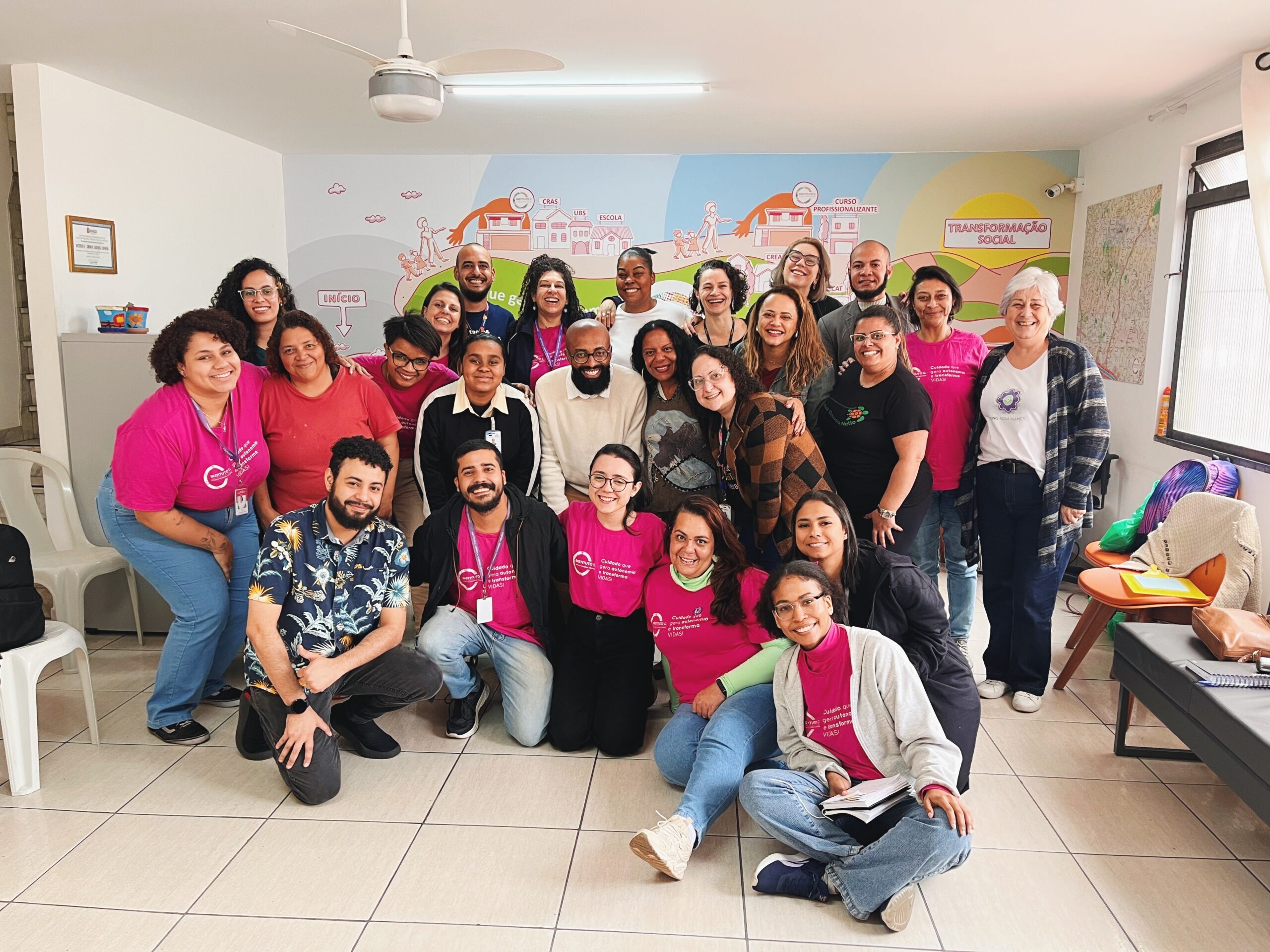
Network meetings are moments of coordination among services and organizations, enabling important discussions and reflections on topics that influence the work of professionals. In one of the meetings, held at Instituto C in August, representatives from various services were present, including Rogério Andrade, from the LGBTI+ Citizenship Center Luana Barbosa dos Reis, which supports victims of LGBTphobia or people in situations of vulnerability.

Rogério reflected on the importance of sharing experiences from each service and how this helps the entire network handle different demands: “The struggles are very similar across the various services. It’s useful to think about which strategies can be shared so we can understand what works in my service that might help others deal with similar situations.”

Another institution in the network that works with young people is Espro. Luciano Duarte, a social coordinator, explains the value of this exchange: “The purpose of network coordination is precisely to allow us to do collective work with families. And then we are truly able to change their reality.”

The strength of the network lies precisely in how these services communicate. At Instituto C, one of our main approaches to guiding families toward autonomy is ensuring that they have access to information and understand their own rights. We also do this by referring them to services that can address the issues they bring to us.

Building a relationship of care

At Instituto C, based on our experiences, we understand that social change begins with listening and welcoming, so we can identify needs and coordinate with the network responsible for implementing public policies. This is why coordination among services is not merely a technical requirement of the Unified Social Assistance System (SUAS), but also a necessity for public policies to be integrated and effective in people’s lives.

“When we open ourselves up to listening to people, we begin to understand their stories and needs. That is why network work with the services is one of our pillars, because in the end, these connections are what allow public policies to become real paths of transformation in the lives of those who need them most,” explains Katia Moretti, Instituto C’s project manager.

In the daily work of our technical team, they observe how important it is to view the network through a collaborative lens. Suellen Claudino, a psychologist at the institute, explains that when we manage to work together—by making contact with CRAS, UBS units, schools, and other assistance services—we become a reference in the territory, and the work with families becomes much more effective.

Additionally, this collective coordination and attentive listening help break some of the fears and hesitations people may have when accessing services. “Families are not always well received when they are referred to assistance services, which can create a sort of barrier. When that happens, our role is to accompany the family, guide them, and say, ‘You can go—they will welcome you. You will be supported and strengthened, and we will be working together,’” Suellen shares.

When CRAS, CREAS, CAPS, UBS units, schools, community groups, and local leaders see themselves as part of a dynamic and collaborative network, it becomes possible to build more effective paths for protecting families in situations of social vulnerability. Real change only happens when the public sector, civil society, and the active participation of those who live in the territory work together.


Eng

35 years of SUS: a global reference, the system has brought the right to health to the entire population of Brazil

One of the public policies that brings Brazilians the most pride turns 35 today: the SUS. The Unified Health System (SUS) is one of the largest and most complex public health systems in the world, and through it, people living in Brazil have access to comprehensive healthcare, from pregnancy and throughout their entire lives.

Before SUS, health was not yet treated as a right for all, and the Brazilian healthcare system did not reach the entire population, excluding a significant portion of it. Access was mainly limited to people employed with a formal work contract, through the National Institute of Medical Assistance of Social Security (INAMPS). Those who did not contribute to social security had very restricted access to healthcare, usually through philanthropic organizations.

It was only with the beginning of Brazil’s redemocratization process and the 1988 Constitution that health began to be viewed with the importance it deserved. Article 196 of the Constitution states that “Health is the right of all and the duty of the State,” marking an important milestone that, shortly afterwards, led to the creation of a public and free healthcare system for the entire population.

Principles and functioning of SUS

SUS was officially created in 1990 through Laws No. 8.080 and 8.142, known as the Organic Health Laws, which established the system’s guidelines and structure. Currently, the system operates through three main bodies that ensure its functioning for the population.

The Ministry of Health serves as the national manager, formulating, regulating, monitoring, and evaluating policies and actions in coordination with the National Health Council. The State Health Secretariat helps develop health policies and actions, supporting municipalities in coordination with the state council, while the Municipal Health Secretariat works with the municipal council and the state level to approve and implement the municipal health plan.

Additionally, three principles form the foundation of SUS:

Universality: Health as a citizenship right for all, with the State responsible for ensuring this right. Access to services must be guaranteed to everyone, regardless of gender, race, or other personal or social characteristics.

Equity: Even though access to healthcare is guaranteed to all, people are not the same and therefore require different types of care according to their individual needs. This principle aims to reduce inequalities by properly treating people who need special care.

Comprehensiveness: The integration of actions such as health promotion, disease prevention, treatment, and rehabilitation helps the population lead healthier lives. This principle refers to the articulation of the healthcare network with other public policies across different areas to improve individuals’ quality of life.

Achievements of SUS over the years

Considered one of the best and most comprehensive health systems in the world, SUS stands out in several areas that make Brazil a reference. One example is the National Immunization Program (PNI), which offers free and large-scale vaccinations to eliminate or control diseases such as polio, measles, diphtheria, and tetanus, among many others that were once major public health concerns in the country.

Other highlights include the free distribution of several medications, including high-cost ones. Treatment for HIV/AIDS and chronic illnesses such as diabetes and hypertension is also provided to the population.

A great example of prevention and continuous care that yields results is the Family Health Strategy (ESF), which operates under the primary care model. This is also recognized by professionals who serve people using these services, such as Giovana Santos, a social worker at Instituto C, who considers the ESF a benchmark program.

“The Family Health Strategy has several functions, such as providing comprehensive and personalized care. It looks after the population’s health considering social, physical, and emotional aspects, not just the illness itself. Through health promotion and disease prevention, the Family Health Strategy aims to carry out pedagogical actions within communities,” Giovana highlights.

Beatriz Martins, a nutritionist at the Institute, also emphasizes the teamwork involved in this approach: “The teams work in an integrated way, which promotes broader access and strengthens the connection between families and health units. It is a highly successful policy.”

Little-known SUS services

Beyond the widely known services such as primary care at UBS units or urgent care at UPAs, SUS is also present in areas that are part of Brazilians’ daily lives. One of these is sanitary surveillance, carried out by the National Sanitary Surveillance System (SNVS), which inspects products, services, and environments to prevent health risks.

For those who cannot travel to a health facility, SUS offers the “Better at Home” program, which sends a team to patients’ homes. To access it, the patient must be referred by another team within the Healthcare Network (RAS), whether from a hospital, Primary Healthcare (APS), or emergency care.

Rehabilitation is also part of SUS, which provides prostheses, wheelchairs, and other resources for people with disabilities. Additionally, it maintains Specialized Rehabilitation Centers (CER), which offer multidisciplinary follow-up. To access these services, patients must seek a UBS.

Challenges of the system

Despite its well-deserved recognition, SUS still faces many challenges, mainly related to public management and the misadministration of health resources. This directly affects everyone who needs its services, who often face long waiting times or barriers to access.

For Giovana, focusing on preventive care is more effective within the public system: “If the public resources allocated to SUS focused on care, prevention, and health promotion, fewer people would become ill, require hospitalization, or need expensive exams and medications,” she reflects.

Geographic location also remains a barrier preventing people from receiving certain types of care, as many hospitals and more complex treatments are located in large cities. “Some populations living in remote or distant regions have difficulty accessing these services. And richer capitals have faster and broader access,” explains Beatriz.

In this context of limited access, social organizations are strong allies in connecting people to health services that are their right.

Social organizations as allies of SUS and the population

Instituto C and many other organizations act as tools that connect people to services. Our technical team provides support to numerous families with children receiving treatment through SUS, working to make the process more accessible through clear information.

“At the Institute, for example, we reinforce the political role of the families we serve. Considering the Institute and other NGOs I know, I believe they are all very aligned with the idea of social rights,” Giovana emphasizes. In addition to organizations working with families outside healthcare facilities, community organizing within local territories is also essential to ensure the system’s principles continue to be upheld.

One of these organizations’ key roles is working in territories that lack more active services, as Beatriz points out: “They play a very important role in expanding access, especially in regions where the Unified Health System cannot reach.”

The work we do at Instituto C—alongside many other dedicated organizations—is also a way of strengthening SUS and ensuring people can exercise their health rights.

Now, we want to take this care and this bridge between families and health services even further, and we will do so by expanding our work to a new municipality. With a contribution starting at 10 reais, you can take part in this transformation and help us reach new families. Click the image and join us in taking this next step!

Eng

Instituto C on Globo: We Participated in Domingão com Huck and Shared an Emotional Journey Together

As you may have seen on our social media, Instituto C participated this past weekend in Domingão com Huck, in an emotional and eventful moment on the segment The Wall. Our participation featured three very special people in the history of the Institute who truly represent all the work we do.

Vera Oliveira, founder and executive director of Instituto C, was in charge of releasing the green and red balls that determined our final prize. Thais Barbosa, our board member, answered the challenging questions on the wall. Cheering us on and representing the families we serve was Grazi, who was once assisted by the Institute and is now part of our team. Also present were Marcos, Vera’s husband, and Nilzete, Thais’ mother, both sending positive energy to our representatives.

Anyone who watched the show could feel the adrenaline of the battle against the wall for the prize. With lots of twists and turns, in the end our board member made the right choice, and Instituto C walked away with over R$190,000. This amount will help us reach our R$350,000 goal to expand our work to a new municipality.

From a Letter to Luciano to the Domingão Stage

Fifteen years ago, Vera wrote a letter to Luciano Huck expressing her desire to work on the show Lar Doce Lar—a segment of Caldeirão do Huck that renovated homes. When she received a reply from Luciano suggesting she work in the third sector, she found the answer somewhat unexpected and didn’t think it aligned with what she wanted to do. But in time, she realized that this path could truly make a difference in many lives—including her own. That was the seed that grew into Instituto C.

For the founder of IC, being on the stage of Domingão com Huck was a mix of emotions, since Luciano’s reply to her letter had been the push she needed to find her purpose. She says she was already very emotional before even stepping on stage, but the end of the segment made it even more special: “The moment we left the recording, we already knew the show was going to be beautiful.”

During the show, Vera also shared the story of the letter with Luciano and how it influenced her decision to create the Institute and spread care to so many families. Today, she hopes to grow that impact even further, reaching more families in different parts of the country.

“I think this is a milestone in IC’s history. It was amazing, and I truly believe this will open doors for us to be present all over Brazil,” she says.

Strong Partnerships from the Start

Some people have been part of Instituto C’s story from the beginning—and Thais is one of them. Now a board member, she was the first social worker at IC and helped implement our methodology. Her excitement at being part of another special moment was clear during the show, further highlighting how vital people like her are to our mission. “I joined IC in 2012. There were only three of us. It was challenging for someone newly graduated, but I love challenges and was determined to make it happen,” Thais says.

Since then, she has worked as a social worker and currently also works in primary healthcare, supporting many people. She believes IC’s work is essential in guiding and making public policies more effective in families’ lives. “Our mission is to care for people—with love, respect, and belief in their potential,” she emphasized during her final remarks on the show.

Families Are the Foundation of Instituto C

Among the over 6,000 families supported by IC, Grazi’s story is a powerful example of that care. She came to IC after going through a difficult time when her premature twin sons were born while she was on a trip to São Paulo. At the Institute, she found strength and learned about the rights she and her children had.

“When I started receiving support from IC, I had no hope, no future vision. I was exhausted, drained, and scared. But through the support, I grew stronger and gained knowledge about many aspects of life in the group discussions,” shares Grazi, who is now a social work intern at the Institute.

She is a great example of how access to knowledge and a listening ear can change someone’s reality. Grazi says she never imagined she would finish school, but now she’s already planning to pursue a postgraduate degree. She also shared how it felt to represent the over 6,000 families supported by IC on the Domingão stage: “It was very emotional, it was beautiful to see the reach and now the results of all of this.” We’re proud to tell her story and now have her on our team as an inspiring colleague.

Beyond the prize, The Wall also helped us see the incredible network that supports and cheers for our work. We were thrilled to see so many people watching and rooting for Instituto C!

It was wonderful to feel all the affection from those who follow Instituto C. Now, to add to the amount we won on the show and reach our goal of expanding to a new municipality, we’ve launched a donation campaign—and you can contribute starting from just R$10 by clicking the button below!